


Content
- 1 What Are Thermoplastics? Definition, Structure and Behaviour
- 2 Thermoplastic vs Thermoset: The Differences That Change a Specification
- 3 The Main Thermoplastic Families and What Each One Costs You
- 4 Melt Processing Windows: Reading the Numbers Before You Quote
- 5 How Thermoplastics Are Processed and What That Does to Design
- 6 Where Thermoplastics Are Used, and Where Thermosets Still Win
- 7 Polyester Resins for Powder Coatings: The Thermoset Side of the Conversation
- 8 Selection Criteria: Matching the Material to Service Conditions
- 9 Recycling, Sustainability and End-of-Life Realities
- 10 Sourcing Signals for Thermoplastic and Thermoset Raw Materials
- 11 Practical Next Steps
A specification lands on the desk with one line that settles everything downstream: the part has to hold its shape at 140 °C in service and still be accepted by a recycling stream at end of life. Two polymer families can answer that brief, and the difference between them is structural rather than cosmetic. Thermoplastics soften when heated and harden when cooled, and they can repeat that cycle many times without a chemical change. Thermosets cure into a three-dimensional network and never melt again. Tooling, cycle time, scrap value, joint design and coating compatibility all follow from that single fact.
This guide is written for people who have to make that call with incomplete data: coating formulators comparing polymer classes, product engineers weighing a molded housing against a coated metal one, and buyers who need to ask a resin manufacturer, supplier or wholesaler the right technical questions before placing an order. It covers the definition, the main families, processing windows, selection criteria, recycling realities and the sourcing checks that separate a serious producer from a trading company.
One clarification up front, because it trips up a lot of specifications: a thermoset powder coating and a thermoplastic part are not alternatives to each other. They usually appear on the same assembly. A metal bracket carries a crosslinked polyester film for appearance and corrosion protection, while the housing bolted next to it is injection molded from a thermoplastic. Understanding both families is what makes the specification coherent.
Thermoplastic means re-meltable; thermoset means permanently crosslinked. Every other practical difference, from recycling to welding to the heat ceiling, is a consequence of that single structural fact.
What Are Thermoplastics? Definition, Structure and Behaviour
Thermoplastics are polymers built from long chain molecules that are held together by entanglement and secondary forces rather than by covalent bonds between the chains. Heat weakens those secondary forces, the chains slide past one another, and the material flows. Cooling reverses the process, and nothing is destroyed chemically along the way. That reversibility is why regrind, welding and closed-loop recycling are technically viable, and why a molded sprue can go back into the hopper instead of a landfill.
Compare that with a thermoset, where chemical curing creates covalent bridges between chains. Once the network forms, the material cannot flow again; heating it far enough simply degrades it. A thermoset part has no melt index, no regrind fraction, and no welding option, but it also has no creep-driven sag at 150 °C under load. Neither family is better in the abstract. The specification decides which failure mode you can live with.
Amorphous and Semi-Crystalline Behaviour
Within the thermoplastic family, two structural arrangements dominate. Amorphous polymers have disordered chains, a glass transition temperature but no true melting point, and soften gradually over a wide band. Polycarbonate, polystyrene, acrylic and rigid PVC behave this way: transparent, dimensionally stable, and comparatively sensitive to solvents. Semi-crystalline polymers form ordered domains that melt sharply at a defined temperature. Polyethylene, polypropylene, polyamide, POM, PBT and PEEK fall into this group, offering better chemical resistance, better fatigue performance and, usually, more mould shrinkage.
The Numbers Buyers Actually Use
When a data sheet arrives, four values do most of the work. Melt flow index (ISO 1133, measured at a stated temperature and load) tells you how easily the grade fills a tool and how much a regrind blend will shift. Density separates filled from unfilled grades and exposes cheap substitutions. Heat deflection temperature under load indicates the practical ceiling for a stressed part, which is always lower than the melting point. Moisture uptake explains why polyamides need drying before processing and why an undried batch can hydrolyze into brittle parts.
A thermoplastic is defined by reversible flow, and every property on the data sheet is only valid for the thermal history, moisture state and test geometry it was measured under.
Thermoplastic vs Thermoset: The Differences That Change a Specification
The comparison below is the one most engineering teams need on a single page during a design review. Values are typical ranges for the family, not guarantees for a particular grade, and a specific product can sit outside them.
| Criteria | Thermoplastics | Thermosets |
|---|---|---|
| Response to heat | Softens and flows; fully reversible | Cures once; degrades rather than flows |
| Molecular structure | Entangled linear or branched chains | Covalently crosslinked three-dimensional network |
| Reprocessing | Repeated re-melting; regrind additions of roughly 10 to 30 percent are common | Not re-meltable; scrap is used as filler, in energy recovery or in emerging chemical routes |
| Chemical resistance | Moderate to good; depends strongly on the polymer and on solvent polarity | Generally high, particularly against solvents and fuels |
| Continuous service temperature | About 60 to 100 °C commodity, 120 to 180 °C engineering, 200 to 260 °C high performance | About 120 to 200 °C for standard systems, higher for special formulations |
| Typical processing | Injection molding, extrusion, blow molding, thermoforming, rotational molding | Casting, compression molding, resin transfer molding, curing ovens, powder coating |
| Joining methods | Ultrasonic, hot plate and laser welding; some solvent bonding | Adhesive bonding and mechanical fastening only |
| Scrap and end of life | Mechanical recycling, feedstock recycling, thermal recovery | Filler use, thermal recovery, early-stage chemical recycling |
| Representative materials | PE, PP, PS, PVC, PET, PA, PC, POM, PEEK | Epoxy, unsaturated polyester, polyurethane, phenolic, polyester powder coating resins |
| Dominant design risk | Creep and heat deflection under sustained load | Brittle failure, incomplete cure and difficult repair |
The repair question is where the two families diverge most visibly on a shop floor. A scratched thermoplastic component can often be re-polished, locally re-melted or welded, and the joint usually retains most of the parent material's strength. A cured thermoset coating cannot be reflowed; the options are to strip and recoat, to touch up with a repair system, or to accept the defect. That asymmetry matters in high-value assemblies where a repairable part is worth more than a slightly cheaper one.
The heat ceiling works the other way. A thermoplastic that performs well at room temperature may deflect noticeably at 90 °C under a continuous bending load, because the same chain mobility that makes it recyclable also makes it creep. A thermoset under the same load holds its shape until the network itself begins to decompose. This is why under-hood brackets, electrical laminates, structural adhesives and coating films so often end up as thermosets, even when the surrounding housing is thermoplastic.
Choose the family by the failure mode you can tolerate: creep and re-meltability on the thermoplastic side, or brittleness and permanent cure on the thermoset side.
The Main Thermoplastic Families and What Each One Costs You
The industry splits thermoplastics into three tiers, and the tiers behave like a price ladder rather than a quality ladder. Moving up buys temperature and chemical headroom, and it also buys drying requirements, higher melt temperatures, more expensive tooling and narrower processing windows.
Commodity Thermoplastics
These account for the overwhelming share of global production by volume, and they are chosen for cost, processability and ductility rather than for stiffness at temperature.
- Low and high density polyethylene for film, pipe, containers and cable insulation
- Polypropylene for living hinges, automotive interior parts and chemical-resistant vessels
- Polystyrene and expanded polystyrene for packaging and low-cost housings
- Rigid and plasticized PVC for window profiles, pipe and cable jacketing
- PET for bottles, sheet and fiber, with good barrier and clarity
Their limits are consistent: service temperatures below roughly 100 °C, poor UV stability without additives, and noticeable creep under sustained load. They are also the easiest to recycle, which is why packaging legislation keeps pushing demand toward mono-material designs.
Engineering Thermoplastics
This tier holds properties at 100 to 150 °C and adds mechanical strength, wear resistance or optical clarity. Polyamide 6 and 66 bring wear resistance and toughness but absorb moisture, which changes dimensions and stiffness. Polycarbonate brings impact strength and clarity but is notch sensitive and needs careful drying. POM offers low friction and excellent dimensional stability for gears and pumps. Glass-filled PBT and PET serve connectors and switchgear. ABS and acrylic cover appearance-driven parts.
High-Performance Thermoplastics
The top tier survives continuous service around 200 to 260 °C with chemical exposure. PPS, PEEK, PEI, PSU and PPSU are the usual names, with PTFE sitting slightly apart for near-universal chemical inertness at the cost of cold flow and poor creep resistance. Processing temperatures above 350 °C force heated tools, hot runners and high-temperature steel, so the total cost per part rises much faster than the resin price alone suggests.
Move up the family ladder only when a measured service temperature or a specific chemical exposure forces it, because each step multiplies resin price faster than it improves any single property.
Melt Processing Windows: Reading the Numbers Before You Quote
Every thermoplastic has a processing window, and that window is usually narrower than a data sheet implies. Below the lower limit the melt is too stiff to fill a thin section, and short shots or weld-line weaknesses appear. Above the upper limit the chains degrade, and the damage shows up later as colour shift, gloss loss, plate-out or a drop in impact strength. The position of the window drives real money: barrel heating energy, cycle time, tool steel selection and whether a hot runner is practical at all. It also frames the comparison with thermosets, because a powder coating cures at roughly 160 to 200 °C while a high-performance thermoplastic may need a melt near 390 °C. The chart below puts the common families on one scale so the gap is visible before anyone opens a quotation.
| Material and typical window | Position on a 150 to 400 °C scale |
|---|---|
| LDPE, 160 to 200 °C | |
| HDPE, 180 to 240 °C | |
| PP, 200 to 260 °C | |
| PS, 180 to 250 °C | |
| PVC, 170 to 210 °C | |
| PA6, 230 to 280 °C | |
| PET, 260 to 300 °C | |
| PC, 280 to 320 °C | |
| PEEK, 350 to 400 °C |
The commodity materials cluster in the lower half of the scale, and that is exactly why they dominate volume: they are cheap to melt, forgiving on standard equipment and easy to regrind. Within that group, polyethylene has the widest and most tolerant window, which is one reason it is the first material many molders learn on. Polypropylene sits slightly higher and narrows as molecular weight rises, and its crystallization shrinkage of roughly 1.5 to 2 percent has to be designed into the tool. Rigid PVC is the exception in the group, because it degrades close to its own processing temperature and depends on stabilizers and tight temperature control to stay profitable.
Polyamide marks the step into engineering territory, and the constraint that matters most is not temperature but water. Moisture above roughly 0.1 percent hydrolyzes the melt, so a dryer is not optional equipment. Polycarbonate pushes the window to 280 to 320 °C and demands both drying and careful control of residence time, because the same melt viscosity that fills a complex part also traps residual stress that later shows up as crazing. PET shares the drying requirement and adds a narrow band between good crystallization and thermal degradation, which is why recycled PET often needs chain extenders before it can be moulded.
PEEK at the top of the scale changes the economics of the whole cell. A melt near 390 °C needs a hot runner, a tool heated to roughly 180 to 200 °C to develop crystallinity, and energy consumption that shows clearly in the cost per part. The pattern across the chart is consistent: the processing window moves upward as the property ceiling rises, and every increment of temperature adds equipment cost, controls cost and energy cost. For a buyer comparing quotes, a large gap between two suppliers on a high-performance grade usually signals a difference in how the material is being dried or how the melt temperature is being controlled, not a difference in goodwill.
The chart also explains why thermoset coating lines remain economically attractive. A curing oven running at 180 to 200 °C is a modest piece of equipment compared with a 400 °C melt system, and the part being coated does not have to be dried to a fraction of a percent. The trade-off is that the cured film cannot be re-melted later, which circles back to the structural distinction that started this article.
Processing temperature is a cost driver, not a quality badge: the higher a material sits on the scale, the more of the part cost lives in drying, tooling and energy rather than in the resin itself.
How Thermoplastics Are Processed and What That Does to Design
Because the melt is reversible, thermoplastics fit a wider set of processes than thermosets, and each process leaves its own fingerprint on the design rules.
- Injection molding for precise, high-volume parts with inserts and tight tolerances
- Extrusion for pipe, profile, sheet, film and cable jacketing in continuous lengths
- Blow molding for bottles and hollow technical parts
- Thermoforming for large panels, trays and liners from sheet
- Rotational molding for tanks and one-piece hollow bodies at low tooling cost
- Additive processes for prototypes and low-volume ducts or fixtures
Three design rules repay attention. Wall thickness should stay as uniform as possible, typically between 1.5 and 3 mm, because thick sections cool slowly and pull the part out of tolerance. Draft angles of 1 to 2 degrees prevent scuffing on ejection and add years to tool life. Ribs should run at roughly half to two-thirds of the nominal wall so they stiffen the part without creating sink marks on the visible face. Shrinkage compensation is grade specific: unfilled polypropylene may need 1.5 to 2.5 percent, while glass-filled polyamide may shrink far less in the flow direction than across it, which distorts anything long and thin.
Joining is where thermoplastics keep an advantage that thermosets cannot match. Ultrasonic welding, hot plate welding and laser welding all rely on re-melting the interface, so the joint can reach close to parent-material strength without adhesives. The catch is that every weld line in an injection-molded part is already a weak path, and the same chain mobility that enables welding also allows stress relaxation over years of service.
Reversible melting is what makes thermoplastic welding possible, and it is also why weld lines and sustained loads demand a generous safety margin in the design.
Where Thermoplastics Are Used, and Where Thermosets Still Win
By volume, packaging is the largest thermoplastic market, followed by construction products such as pipe, profile and insulation, then automotive, electrical and medical applications. Automotive illustrates the logic well: bumpers, instrument panels, under-hood covers and battery housings are molded from thermoplastics because they are tough, light and recyclable at end of vehicle life. Medical devices rely on the same family for syringes, tubing and housings, where clarity, sterilizability and the ability to mold to tight tolerances all matter.
Thermosets hold the positions where heat, chemical load and structural continuity arrive together. Structural adhesives, electrical laminates, composite panels, phenolic cookware handles and high-temperature electrical components all depend on a crosslinked network that will not sag. Coatings follow the same rule: a cured polyester or epoxy powder film protects appliances, office furniture, garden fencing and architectural aluminium precisely because it does not reflow in summer heat or under a hot panel.
The two families usually meet inside one product. A coated steel appliance panel carries a thermoset film a few tens of microns thick over metal, while the plastic trim beside it is a thermoplastic molding. Even in composites the boundary is moving, with thermoplastic matrices offering weldability and recyclability against the well-established stiffness and fire performance of thermoset systems. For a specifier, the practical takeaway is that the question is rarely which family is better, but which function inside the assembly each material has to perform.
A finished product almost never uses one polymer family; the thermoplastic carries structure and recyclability while the thermoset carries heat resistance and surface protection.
Polyester Resins for Powder Coatings: The Thermoset Side of the Conversation
The moment a specification moves from a molded part to a coated one, the material question changes. Powder coatings use polyester resins as the binder, and those resins are deliberately thermosetting: carboxyl or hydroxyl functional polyester chains are blended with a curing agent, then crosslinked in an oven at roughly 160 to 200 °C for 10 to 20 minutes to form a film typically 60 to 90 microns thick. The choice of curing agent decides the bake window, the outdoor durability and the chemical resistance, which is why formulators treat it as the central decision rather than a detail.
Hybrid epoxy-cured polyester resins combine polyester with epoxy in ratios around 50/50 or 60/40. They flow well, cure at moderate temperature and deliver strong chemical resistance at an attractive cost, which makes them a standard choice for indoor applications such as office furniture, shelving and appliance internals. Their weakness is UV exposure: the epoxy component yellows and chalks outdoors, so the specification should keep them inside.
 Hybrid Epoxy-Cured Polyester Resins for Powder CoatingsThese hybrid epoxy-cured polyester resins suit indoor powder coatings, with 50/50 and 60/40 grades spanning matte to high gloss and varied mechanical properties.View Product →
Outdoor TGIC-cured polyester resins use a tri-glycidyl isocyanurate crosslinker, usually at a 93/7 polyester to curing agent ratio. The cured film holds gloss and colour through years of weathering, resists chalking and keeps hardness without becoming brittle. Handling controls for the crosslinker are well established in the industry, and the system remains the reference point for architectural aluminium, garden fencing and traffic facility components.
TGIC-Cured Polyester Resins for Outdoor Powder CoatingsOutdoor TGIC-cured polyester resins in multiple YZ grades, mostly 93/7, offering weather resistance, hardness and gloss for building and machinery coatings.View Product →
Outdoor HAA-cured polyester resins use a hydroxyalkylamide crosslinker instead, which allows curing at lower temperature or shorter time for the same film performance. That matters when a coater wants to reduce oven energy, coat heat-sensitive assemblies or raise line speed without buying a new oven. Overbake resistance is generally good, and the outdoor durability suits building materials, fitness equipment and communication equipment housings.
HAA-Cured Polyester Resins for Outdoor Powder CoatingsOutdoor HAA-cured polyester grades for lower-temperature or faster curing, with options for weather resistance, low gloss, mechanical properties and storage stability.View Product →
A fourth route, isocyanate-cured polyester, is chosen where flexibility, flow and exterior durability have to coexist, and two-component TGIC systems extend the TGIC route for formulators who need a different reactivity balance. Whichever chemistry is selected, the coater will judge the resin on gel time, reactivity, storage stability, gloss level, mechanical performance after cure and resistance to solvents in a rub test. Those are the numbers that connect a resin batch to a finished film on a production line.
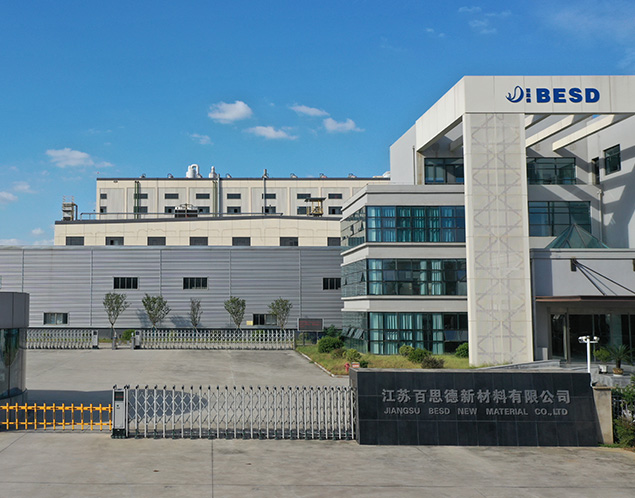
For buyers, the sourcing layer matters as much as the chemistry. A polyester resin manufacturer working from a single integrated site can control raw material intake, reaction, inspection and packing under one quality system, which is what makes batch-to-batch consistency realistic at scale.
In a powder coating, the resin supplies the thermoset backbone while the curing agent sets the bake window, and the bake window determines which substrates and line speeds are commercially viable.
Selection Criteria: Matching the Material to Service Conditions
Two decision paths cover most real projects. Reading them side by side is faster than working through a property database.
|
Lean thermoplastic when:
|
Lean thermoset when:
|
A checklist keeps the discussion honest. State the maximum service temperature with a margin, then the duration of the load, because a 20-minute excursion and a 20-year one are different problems. List every chemical the part will contact, including cleaning agents. Confirm UV exposure and the required gloss retention period. Quantify impact and stiffness instead of describing them as "strong". Then add the commercial filters: annual volume, tooling budget, acceptable cycle time, joining method, repair policy, recycling obligation and the cost target per finished part rather than per kilogram of resin.
Write the service temperature, load duration, chemical list and recycling obligation into the specification before comparing prices, because those four lines eliminate most unsuitable candidates immediately.
Recycling, Sustainability and End-of-Life Realities
Thermoplastics carry a genuine recycling advantage, but only when the design cooperates. Mechanical recycling depends on sorting, and sorting depends on identifiable mono-material streams, which is why near-infrared sorting lines work well on clear PET and poorly on black, multi-layer or heavily filled parts. Regrind is normally reintroduced at 10 to 30 percent, and the first property to fall away is impact strength, followed by melt flow stability and colour consistency. Design for disassembly, material labelling and avoiding incompatible adhesives do more for the recycling rate than any marketing claim on the box.
Thermosets cannot be re-melted, so the routes narrow to regrind used as filler, energy recovery and a set of emerging chemical processes that break the network down into reusable fractions. That is a real limitation, and it should be priced into the decision when a customer has a take-back scheme. It does not make thermosets the wrong answer, because durability also counts: a coated part that lasts twenty years outdoors has a lower annual material cost than a recyclable one that needs replacing every five.
On the coating side, the environmental case rests on different pillars. Powder coatings contain no solvent, so there is no VOC emission during application, and over-spray can be recovered and reused within defined limits. Thin films protect large surfaces with modest material weight, and a properly cured polyester film extends the service life of steel and aluminium components considerably. Certification is a reasonable proxy for management discipline here: ISO 9001 covers quality systems and ISO 14001 covers environmental management, and holding both signals that process control is documented rather than improvised.
The recyclability advantage of thermoplastics is only realised when the part is mono-material and easy to disassemble; mixed assemblies lose it at the first shredder.
Sourcing Signals for Thermoplastic and Thermoset Raw Materials
The first question to any supplier is whether they are a direct manufacturer, a converter or a trading company. The answer changes who owns the technical conversation when a batch behaves differently from the last one. A direct manufacturer can explain which line produced a batch, what the reaction or extrusion parameters were and what the inspection records show. A wholesaler adds logistics convenience and smaller minimum order quantities, which is valuable, but the application support usually stops at the paperwork.
- Ask for plant location, line count and annual capacity in tonnes rather than in vague descriptions
- Request ISO 9001 and ISO 14001 certificates with a current validity date and the certification body's name
- Require a certificate of analysis per batch, including the values that matter for your process
- Confirm traceability from raw material intake to packed goods, including storage conditions
- Ask which application tests are run routinely and which are only run on request
- Clarify packaging options, pallet configuration, lead time and export documentation
- Establish who handles technical queries after delivery, and how quickly
For polyester resin supply, the relevant technical evidence includes the acid value or hydroxyl value, viscosity or melt flow behaviour, glass transition temperature by differential scanning calorimetry, gel time at the specified cure temperature and reactivity consistency across batches. For thermoplastics, it includes melt flow index, density, moisture at packing and a statement of regrind content if any. In both cases, a supplier that volunteers this data before being asked is usually a supplier with a functioning quality system behind it.
A producer with an integrated site has an advantage that is easy to underestimate: raw material reception, storage, reaction, inspection and packing all sit under one management system, so a deviation is caught internally rather than discovered by the customer three weeks later. Capacity matters too, because a supplier that can run large volumes steadily tends to have more predictable lead times than one that schedules around short campaigns.
Ask for the certificate of analysis, the certification dates and the plant address in the first exchange; suppliers who answer quickly and specifically are the ones worth auditing.
Practical Next Steps
If the next decision on your desk is a thermoset one, the most useful move is to see how the resin is actually made and then talk through the grade that fits your cure schedule.
|
See the production line Reaction vessels, storage tanks, inspection stations and finished goods warehousing, shown stage by stage. |
Discuss a custom grade Standard products, ODM and OEM development, and adjustment of reactivity or gloss for a specific line. |
The question "what are thermoplastics" has a short answer and a long tail. The short answer is that they are polymers which soften on heating and harden on cooling without a permanent chemical change, so they can be remelted, welded and recycled. The long tail is everything a specification has to pin down: which family, which service temperature with which margin, which chemicals, which joining method and which end-of-life route.
Thermosets are not the older, lesser option. They are the correct answer where a crosslinked network is the only way to hold a film or a part together under heat, load and chemical attack, which is exactly why polyester resins remain the backbone of powder coatings for architecture, appliances, furniture and transport equipment. A specification that understands both families will choose each one for the job it does best, and will ask its suppliers for the evidence that supports the choice.
Decide the material family from the failure mode you cannot accept, then confirm the grade with drying, cure and inspection data rather than brochure claims.


