


Content
- 1 What a Formula for Plastic Actually Contains
- 2 The Resin Backbone Decides Most of the Formula
- 3 Stoichiometry: The Ratios You Cannot Eyeball
- 4 Fillers, Pigments and Additives: Turning a Recipe into a Product
- 5 Comparing Curing Systems in a Formula for Plastic Coatings
- 6 Reading the Trade-offs as a Chart
- 7 Processing: Where a Sound Formula Still Fails
- 8 Matching the Formula to Substrate and Service Environment
- 9 Quality Control and Supplier Risk
- 10 Customising a Formula With a Polyester Resin Manufacturer
- 11 A Practical Checklist Before Approving a Formula
A formulator rarely starts with colour. The brief that lands on the desk usually reads something like this: 60 micron film build, 1,000 hours of QUV exposure without more than 50 percent gloss loss, 500 hours of neutral salt spray, and a bend test at 5 mm mandrel with no cracking. Before a single pigment is weighed, someone has to answer a harder question, which is what the formula for plastic in this system actually is.
That formula is not a secret recipe handed down. It is a four-block architecture: a polyester resin binder, a curing agent that crosslinks it, a filler and pigment load, and a small additive package. Every block has a working range, and the ranges are locked to two numbers printed on the resin datasheet, the acid value and the glass transition temperature. Get those two numbers right and the rest of the formula follows. Get them wrong and the defects show up three weeks later on a customer's coating line, not in the laboratory.
This article walks through the composition logic, the stoichiometry that sets the resin-to-curing-agent ratio, the filler and additive decisions that turn a recipe into a saleable product, and the processing window where good chemistry still fails. It is written for coating formulators, purchasing engineers and technical managers who need to judge whether a proposed formula will survive real service conditions.
What a Formula for Plastic Actually Contains
In thermoset coating systems, the term covers five functional blocks. The binder, almost always a polyester resin in outdoor powder systems, forms the continuous film. The curing agent reacts with functional groups on that binder and converts a thermoplastic melt into a three-dimensional network. Fillers add volume, hardness and barrier properties at low cost. Pigments deliver colour and opacity. Additives, which rarely exceed 3 percent of the total mass, control degassing, flow, surface texture and ultraviolet stability.
The reason formulators talk in ranges rather than single figures is that the blocks compete. Raising filler from 20 to 30 percent reduces raw material cost by a measurable margin, but it also raises melt viscosity, shortens gel time and can push gloss down by five to ten units at 60 degrees. The formula has to be balanced against the specification, not optimised for one variable.
| Component block | Typical mass share | Primary job in the film | Failure mode when mis-specified |
|---|---|---|---|
| Polyester resin | 50 to 70 percent | Binder; sets gloss, flow and mechanical strength | Poor levelling, brittle film, low initial gloss |
| Curing agent | 3 to 10 percent | Crosslinks the binder; fixes the cure window | Under-cure, weak solvent resistance, blocking |
| Fillers | 15 to 30 percent | Cost control, hardness, matting, barrier effect | Settling, sanding marks, reduced impact strength |
| Pigments | 2 to 25 percent | Colour, opacity, sometimes UV screening | Hiding failure, batch-to-batch colour drift |
| Additives | 0.5 to 3 percent | Degassing, flow, texture, UV and heat stability | Pinholes, craters, chalking after outdoor exposure |
Note how wide the pigment band is. A titanium dioxide white at 25 percent and a deep organic red at 3 percent sit in the same table but behave nothing alike, because the pigment volume concentration changes the optics, the melt rheology and the cure kinetics at the same time. This is why a formula transferred from one colour to another almost never transfers cleanly.
The Resin Backbone Decides Most of the Formula
The polyester resin is not a neutral carrier. It carries the acid value that determines how much curing agent the system needs, the glass transition temperature that determines storage stability and grinding behaviour, and the melt viscosity that determines flow at bake. A resin with an acid value of 33 mg KOH/g and a Tg near 58 degrees behaves completely differently from one at 72 mg KOH/g and a Tg of 62 degrees, even when both are labelled as outdoor grade.
Four curing families dominate the powder coating side of the industry, and each one pulls the formula in a different direction.
- Hybrid epoxy-cured polyester resins, usually blended with epoxy resin at roughly 50/50, deliver excellent chemical resistance and mechanical toughness, but they chalk quickly outdoors and are normally specified for interior equipment, furniture and appliance parts.
- Outdoor TGIC-cured polyester resins offer a mature balance of weather resistance, hardness and cost, and remain the reference point for architectural aluminium and general outdoor metalwork.
- Outdoor HAA-cured polyester resins use a non-toxic crosslinker and match TGIC performance closely in most exterior applications, with a slightly narrower cure window and a stronger tendency toward outgassing if the filler load is high.
- Isocyanate-cured polyester resins based on hydroxyl-functional polyesters produce very flexible, thin-film-friendly coatings and are common where post-forming or bending after cure is required.
Two-component TGIC systems sit alongside these as a way to tune reactivity and flow separately, which matters when a single resin cannot satisfy both a fast cure schedule and a smooth finish.
 Hybrid Epoxy-Cured Polyester Resin GradesBrowse hybrid epoxy-cured polyester grades at 50/50 to 75/25 ratios, offering strength, toughness and chemical resistance for industrial and anti-corrosion coatings.View Product →
Notice the practical consequence: the resin choice is made before the filler and additive package, because it determines the crosslink density ceiling. A formulator who tries to compensate for a soft resin by adding more filler will simply produce a harder, more brittle film with the same weak network underneath.
Stoichiometry: The Ratios You Cannot Eyeball
Once the resin is fixed, the curing agent quantity is arithmetic, not judgement. The calculation uses the resin acid value and the curing agent's epoxy equivalent weight. In grams of curing agent per 100 grams of resin, the expression is acid value multiplied by equivalent weight, divided by 56,100, then multiplied by 100. The 56,100 figure is the molecular weight of potassium hydroxide expressed in milligrams, which is why acid value is reported in mg KOH/g.
For a TGIC system with an equivalent weight of about 99 and a resin acid value of 33, the result is approximately 5.8 grams per 100 grams of resin, which corresponds to a 93/7 resin-to-curing-agent split. For an HAA system with an equivalent weight near 84.5 and an acid value of 35, the answer lands around 5.3 grams, or roughly a 95/5 split. These are the numbers that should appear on the batch record, not a remembered figure from a previous project.
| System | Typical split | Ratio basis | Practical cure schedule |
|---|---|---|---|
| Hybrid epoxy-cured | 50/50 resin to epoxy | Carboxyl and epoxy equivalence | 180 to 200 degrees, 10 to 15 minutes |
| Outdoor TGIC-cured | 93/7 | Acid value and TGIC equivalent weight | 200 degrees, 10 to 15 minutes |
| Outdoor HAA-cured | 95/5 | Acid value and HAA equivalent weight | 190 to 200 degrees, 10 to 20 minutes |
| Isocyanate-cured | Hydroxyl to NCO near 1:1 | Hydroxyl value and blocked isocyanate content | 180 to 200 degrees, 15 to 30 minutes |
A deviation of half a percent in curing agent sounds trivial and is not. Under-crosslinking leaves unreacted acid groups that show up as poor solvent rub resistance and a film that softens at 70 degrees. Over-crosslinking raises internal stress and produces cracking on thin-gauge panels after impact. On a production line running 20 tonnes a month, the difference between 6.5 and 7.0 percent TGIC can be the difference between a compliant batch and a rework claim.
Fillers, Pigments and Additives: Turning a Recipe into a Product
Filler selection is where cost engineering and film performance meet, and where most disagreements between purchasing and technical teams originate. Barium sulfate gives density and smoothness with modest oil absorption. Calcium carbonate is cheaper and improves sandability but raises the risk of gloss loss and can react with acidic residues. Talc improves barrier properties and anti-settling behaviour but tends to dull the finish and increase melt viscosity.
Filler decisions
|
Additive decisions
|
Pigments behave differently again. High oil absorption pigments absorb part of the binder and effectively reduce the resin available for crosslinking, which can push a system that cured well at 200 degrees into under-cure. Rutile titanium dioxide is relatively benign, but organic yellows and reds often need a cure promoter or a longer dwell time. When a colour change causes a cure failure, the cause is almost always pigment absorption rather than the resin.
Comparing Curing Systems in a Formula for Plastic Coatings
The comparison table below is the one most purchasing teams ask for first, because it maps directly onto a specification document. The values are typical for commercial grades and assume a well-controlled substrate pretreatment. They are not guarantees, and any project with a demanding warranty clause should be validated with actual exposure data rather than a catalogue figure.
| System | Outdoor durability | Chemical resistance | Flexibility | Typical application |
|---|---|---|---|---|
| Hybrid epoxy-cured | Low, chalks within one season | Very high | Moderate | Interior furniture, appliance housings, shelving |
| Outdoor TGIC-cured | High, 1,000 hours QUV is routine | Moderate | Moderate to stiff | Architectural aluminium, fence systems, traffic hardware |
| Outdoor HAA-cured | High, comparable to TGIC | Moderate | Moderate | Exterior metalwork where non-toxic crosslinkers are specified |
| Isocyanate-cured | Moderate, dependent on stabilizer package | Moderate | High | Post-formed parts, coils, thin-gauge components |
| Two-component TGIC | High | Moderate | Tunable | Mixed-performance specifications with tight flow targets |
TGIC-Cured Polyester Resins for Outdoor CoatingsExplore fast-curing TGIC polyester grades for outdoor building, machinery and coil coatings, with high hardness, wear and chemical resistance; compare typical values against project needs.View Product →
Read the table as a set of trade-offs rather than a ranking. The hybrid system wins on chemical resistance and loses on weather resistance by a wide margin, which is why it dominates interior applications and almost never appears on an exterior architectural schedule. The isocyanate system wins on flexibility and loses on cost and handling complexity, because blocked isocyanate requires careful storage and a longer cure.
One more consideration that tables rarely capture: repair and rework. A hybrid film that cures at 180 degrees can often be recoated and refired without surface defects, while a fully crosslinked TGIC film may need mechanical removal. On a line with a high reject rate, the easier-repair system sometimes wins even when its datasheet numbers are lower.
Reading the Trade-offs as a Chart
The numbers in a specification rarely move together, and that is the first thing a formulator has to accept. A system that survives a thousand hours of ultraviolet exposure will usually give up some resistance to solvents and acids. A system that resists a twelve-hour chemical soak will usually chalk within a single outdoor season. The gap is not a defect in either product; it is the natural consequence of crosslink density and polymer backbone chemistry pulling in opposite directions. The chart below plots both dimensions on the same 0 to 100 index so that the trade-off becomes visible instead of abstract. The index is a relative comparison between the four main curing families, not an absolute test result, and it should be read alongside the supplier datasheet for whichever grade is actually being purchased.
The first pattern the chart makes obvious is the near-total inversion between the hybrid system and the three outdoor families. Hybrid chemistry sits at 95 on chemical resistance and 25 on outdoor durability, while the outdoor systems cluster between 70 and 92 on both axes. There is no system in this set that scores above 90 on both, and a specification demanding that combination is asking for a material that does not exist at commercial scale.
The second pattern is the narrow spread among the outdoor families themselves. TGIC, HAA and isocyanate sit within five index points of one another on durability and within six points on chemical resistance. This tells a formulator something practical: once the outdoor families are on the table, the deciding factors shift away from raw performance and toward cure temperature, crosslinker availability, regulatory preference and cost per square metre of applied film. Performance curves alone will not settle the argument.
The third pattern concerns the isocyanate system. Its 92 durability figure looks like the highest on the chart, but that score depends heavily on the stabiliser package in the formula. Remove the hindered amine stabilizer and the number falls sharply within a single exposure cycle. Durability at that level is a formulation achievement, not a property of the crosslinker alone, and it has to be re-earned with every change to the additive package.
A fourth observation is about film thickness. The index values assume a 60 to 80 micron film. Reduce the film to 40 microns and the durability figures for all four systems drop by roughly eight to twelve points, because there is less material to absorb ultraviolet energy and to shield the substrate. Any formula transferred to a thinner specification must be re-validated, even when the resin and curing agent are unchanged.
Finally, the chart is a reminder that chemical resistance and weather resistance are not on the same curve. They respond to different structural features. Chemical resistance tracks crosslink density and the absence of hydrolysable groups, while weather resistance tracks backbone stability under ultraviolet light and the effectiveness of the stabiliser package. Changing one without disturbing the other is only possible within a narrow window, which is precisely why formulators keep both numbers on the same page.
Processing: Where a Sound Formula Still Fails
A formula validated in a laboratory mixer can still fail in a production extruder, and the reasons are mechanical rather than chemical. The pre-mix stage has to disperse pigments and fillers without generating enough frictional heat to partially react the resin and curing agent. Once a small fraction of the binder has pre-reacted, gel time shortens, flow drops and the film shows a texture that no additive can repair.
Extruder zone temperatures of 90 to 110 degrees are typical for polyester powder systems, with residence time kept as short as the screw design allows. The cooling belt and the flaking step matter more than they appear to, because a thick flake cools unevenly and can retain enough heat to continue reacting at the edges. Grinding then produces a particle size distribution that governs transfer efficiency and film build.
- Weigh the pre-mix against the batch record, not against a remembered formula.
- Keep the extruder torque within the range established during validation; a rising torque usually signals filler overload or a degraded resin.
- Check gel time on every batch, since it is the fastest indicator that the resin and curing agent have begun to react early.
- Record the particle size distribution after grinding; fines below 10 microns cause back-spray losses and dusting.
- Confirm the cure schedule on the customer's actual line, not only in the laboratory oven.
The processing window also constrains what the formula can contain. High filler loads increase screw wear and demand harder barrel liners. Highly reactive two-component systems demand precise temperature control on the cooling belt. These are commercial decisions as much as technical ones, and they belong in the formula discussion from the first meeting rather than after the first failed batch.
Matching the Formula to Substrate and Service Environment
The same resin grade can appear in a car component, a garden fence and a refrigerator panel, but the surrounding formula is never the same. An automotive underbody part faces stone-chip impact, de-icing salt and thermal cycling, so the formula leans toward flexibility and adhesion rather than maximum gloss. A fence panel faces years of direct sunlight and rain, so the priority is gloss retention and chalking resistance. An appliance housing faces detergents and cleaning agents, which pulls the specification back toward chemical resistance.
In practice, this means the substrate sets the pretreatment and the service environment sets the curing family. Steel with a zinc phosphate pretreatment tolerates a wider formula range than aluminium, which is more sensitive to surface oxides and to cure-induced stress. Galvanised steel introduces a further variable, because zinc can react with acidic resin residues and cause adhesion loss after humidity exposure.
For a project involving automobile manufacturing, the formula discussion usually starts with the chip-resistance test method and the bake schedule available at the plant. That order matters: a formula that meets the chip test but requires a bake the plant cannot reach is not a solution, and a formulator who knows the line constraints in advance will shortlist two resin families instead of eight.
Building materials, communication equipment cabinets, fitness frames, office furniture and traffic facilities each bring their own exposure profile. Outdoor traffic hardware often needs both colour stability and mechanical durability against impact and abrasion, which is where TGIC and HAA systems earn their place. Interior office furniture leans toward hybrid chemistry because it delivers hardness and chemical resistance at a lower cost, and weather exposure is simply not part of the brief.
Quality Control and Supplier Risk
Most formulation failures traced back to raw materials are not dramatic. They are small drifts: an acid value two units above the previous delivery, a volatile content slightly higher than expected, a gel time that has moved by fifteen seconds. Individually these are within tolerance. Together they shift the cure behaviour of the finished powder enough to produce a batch that fails the impact test while passing every other check.
That is why incoming inspection has to test the properties that feed the formula calculation, not just the properties that appear on a generic certificate. Acid value and glass transition temperature are the two that matter most for polyester resins, because both feed directly into the curing agent ratio and the flow behaviour. Volatile content matters for pinhole formation. Colour and clarity matter for light shades, where a slight yellowing in the resin will shift the final colour even at low loading.
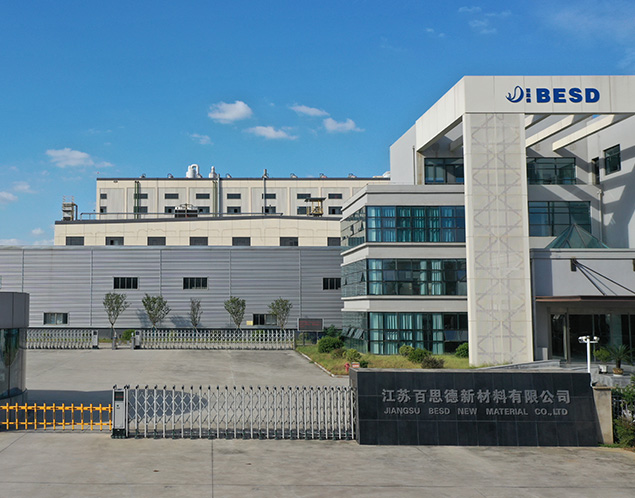
Supplier stability deserves as much attention as supplier price. A resin manufacturer operating its own reactor, storage tanks and packaging line can hold a specification across years, while a trading intermediary reselling from multiple sources cannot. Visiting the production site, or reviewing the inspection stage of a supplier's process, tells a purchasing team more about batch consistency than a stack of certificates. Certification to ISO 9001 and ISO 14001 is a useful baseline, but the practical question is whether the supplier measures the same parameters the formulator depends on, batch after batch.
For buyers, there are three questions worth asking before approving a new resin source. Does the supplier report acid value and Tg on every batch certificate? Can they explain how a batch outside the historical range is handled? And can they provide retained samples from previous deliveries for comparison? A supplier who answers all three without hesitation is usually operating a controlled process.
Customising a Formula With a Polyester Resin Manufacturer
Standard grades cover perhaps 70 percent of projects. The remaining 30 percent need adjustment: a lower acid value for a softer film, a higher Tg for better summer storage, a modified melt viscosity for a specific extrusion line. This is where the relationship with the resin supplier starts to matter commercially, because a customisation request handled well can shorten a development cycle from six months to eight weeks.
A supplier with in-house reaction capacity can adjust the resin backbone itself, rather than blending standard grades to approximate a target. Backbone adjustment produces a reproducible product; blending produces a result that drifts as the blend ratio shifts. When a coating formulator specifies an acid value of 30 plus or minus 2, the supplier needs the ability to hit that window by design, not by averaging two batches.
Production capacity is the second commercial variable. A plant with a 100,000 tonne annual capacity and eight production lines can absorb a trial batch and a scale-up order without changing equipment, which reduces the risk that the sample approved in the laboratory is not the material delivered in the first commercial shipment. Packaging automation matters too, because a fully automated packing line reduces the chance of contamination between grades.
For exterior work where a non-toxic crosslinker is mandated, the conversation often turns to HAA-cured systems, where the resin's acid value and the crosslinker's reactivity have to be matched more precisely than in a TGIC system.
HAA-Cured Polyester Resins for Outdoor Powder CoatingsReview lower-toxicity HAA-cured polyester grades with lower-temperature cure options and weather resistance for exterior powder coatings, including formulations suited to custom development discussions.View Product →
Ask three questions before committing to a custom development. What is the minimum trial batch size, and will it be produced on the same line as commercial volume? What is the typical lead time from approved sample to first delivery? And what happens if the delivered batch sits at the edge of the acid value tolerance rather than the centre? The answers reveal whether the supplier is a resin manufacturer or a reseller with a laboratory.
A Practical Checklist Before Approving a Formula
Formulas are approved in meetings, and meetings reward confidence. The checklist below is designed to slow that process down just enough to catch the gaps that usually surface after the first production run.
- Confirm the resin acid value and Tg from the actual certificate, not from a datasheet downloaded two years ago.
- Recalculate the curing agent quantity from the equivalent weight and record the calculation in the batch file.
- State the filler type and loading, and record the gel time at that loading.
- Verify that pigment oil absorption has been accounted for in the cure schedule.
- Check that the additive package includes a degassing agent if the film thickness exceeds 80 microns.
- Confirm the cure window against the customer's actual oven profile, including ramp rate and dwell.
- Record the film thickness assumption behind every durability claim, since a 40 micron film does not behave like an 80 micron film.
- Agree on the incoming inspection parameters that will be tested on every delivery.
- Document the trial batch size and the scale-up plan, including which line will produce commercial volume.
- Retain samples from the first three commercial batches for side-by-side comparison after six months.
None of these steps is sophisticated. They are the basic discipline that keeps a technically sound formula from becoming a commercial problem. In a market where a single rework claim can consume the margin on several tonnes of product, that discipline is the difference between a formula that works and a formula that sells.
A formula for plastic, in the coating sense, is arithmetic wrapped in judgement. The arithmetic is the acid value calculation and the curing agent equivalent weight, and it should never be estimated. The judgement concerns which ranges to push when cost, cure schedule and service environment cannot all be satisfied at once. A formulator who understands which variable is load-bearing and which is decorative will always outperform one who copies a ratio.
That understanding also changes how a purchasing team evaluates a polyester resin supplier. The right questions are not about the catalogue, they are about the certificate, the reactor, the inspection stage and the ability to hold a specification across a hundred batches. A supplier who can answer those questions is worth more than one who simply quotes a lower price per kilogram, because the cost of a failed batch is never measured in kilograms.
Start with the service environment, work back to the curing family, calculate the stoichiometry, and only then tune the filler and additive package. In that order, the formula holds together. In any other order, it is a guess that occasionally survives a laboratory test.


