


Content
- 1 What Are Amorphous vs Semi Crystalline Thermoplastics?
- 2 Performance Differences That Matter in Real Parts
- 3 How to Choose Between Amorphous and Semi Crystalline Thermoplastics
- 4 Common Pitfalls and Maintenance Guidance
- 5 FAQ About Amorphous vs Semi Crystalline Thermoplastics
- 5.1 Which type is more durable, amorphous or semi crystalline thermoplastics?
- 5.2 Can amorphous and semi crystalline thermoplastics be blended?
- 5.3 How does crystallinity affect shrinkage in semi crystalline thermoplastics?
- 5.4 Is semi crystalline thermoplastic always better for high-temperature use?
- 5.5 How do I know which class a specific grade belongs to?
If you are molding a clear medical housing that must survive autoclaving, an amorphous thermoplastic will usually beat a semi crystalline grade. If you are producing a fuel-line connector that must resist gasoline and repeated stress, a semi crystalline thermoplastic is typically the better answer. The difference comes down to how polymer chains pack together. Amorphous vs semi crystalline thermoplastics is not an academic debate; it determines shrinkage, clarity, chemical resistance, fatigue life, and processing windows. For powder coating resin suppliers and compounders, this distinction also influences how a polyester resin behaves before and after curing.
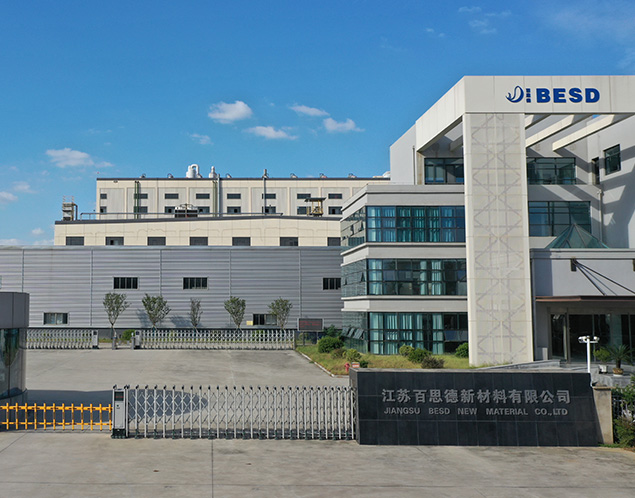
BESD, a polyester resin manufacturer based in Yangzhou, has spent more than two decades helping formulators match resin chemistry to end-use demands. While the company’s core products are thermoset polyester resins for powder coatings, the same molecular logic—ordered versus disordered chains—explains why some resins flow and level better while others resist chemicals and outdoor exposure. This article gives you the practical comparison, the trade-offs, and a selection framework you can use on the plant floor.
What Are Amorphous vs Semi Crystalline Thermoplastics?
Thermoplastics soften when heated and harden when cooled, but their internal structure is not uniform. In amorphous thermoplastics, polymer chains are arranged randomly, like a bowl of cooked spaghetti. There is no long-range order. In semi crystalline thermoplastics, some regions of the chains fold into ordered lamellae, forming crystalline domains that are embedded in an amorphous matrix. No commercial thermoplastic is 100% crystalline; the crystalline fraction typically ranges from 20% to 80%.
This structural difference has immediate consequences. Amorphous materials are usually transparent because light passes through the disordered chains without significant scattering. Semi crystalline materials are often opaque or translucent because the crystalline domains scatter light. Amorphous polymers soften gradually over a glass transition temperature range, which makes them easier to thermoform and gives them good impact resistance at low temperatures. Semi crystalline polymers have a sharp melting point, higher stiffness above the glass transition, and better resistance to solvents and repeated loading.
| Property | Amorphous Thermoplastics | Semi Crystalline Thermoplastics |
|---|---|---|
| Chain arrangement | Random, entangled | Ordered lamellae in amorphous matrix |
| Optical clarity | Usually transparent | Opaque or translucent unless nucleated |
| Shrinkage | Low and isotropic | Higher and anisotropic |
| Chemical resistance | Moderate to poor | Good to excellent |
| Impact strength | High, especially at low temperature | Moderate to high, depends on crystallinity |
| Fatigue resistance | Lower | Higher |
Performance Differences That Matter in Real Parts
When you move from data sheets to production, five differences decide most projects: shrinkage, chemical resistance, impact behavior, fatigue life, and thermal performance. Amorphous resins such as polycarbonate (PC), acrylic (PMMA), and ABS shrink uniformly, so they hold tight tolerances in complex molds. Semi crystalline resins such as polypropylene (PP), nylon (PA), and PBT shrink more, and the shrinkage can differ in flow and cross-flow directions. That anisotropy is manageable with mold design, but it must be planned from the start.
Chemical resistance is another decisive factor. Solvents penetrate amorphous chains more easily because there is no crystalline barrier. Semi crystalline materials resist hydrocarbons, alcohols, and mild acids far better, which is why they dominate under-the-hood automotive parts and industrial fluid handling. Impact behavior also diverges: amorphous polymers absorb energy through chain entanglement, giving excellent low-temperature impact strength. Semi crystalline polymers can be tougher at room temperature if the crystalline fraction is optimized, but they may become brittle below their glass transition temperature.
 Professional Polyester Resins For TGIC Based Formulations ManufacturerUtility model patent certificateView Product →
For powder coating formulators, a similar principle applies. Semi crystalline polyester resins can offer sharper melting and lower melt viscosity, which improves flow and leveling at lower curing temperatures. Amorphous polyester resins, by contrast, provide better storage stability and a wider processing window. BESD supplies both outdoor TGIC cured and HAA cured polyester resins, allowing coaters to tune the balance between reactivity, flow, and weatherability. The product card above links to an outdoor TGIC grade that is widely used for architectural and automotive components.
To make the comparison concrete, consider a horizontal bar chart of typical performance ratings. The chart below is based on published polymer property ranges and internal testing experience. It is not a substitute for specific grade data, but it shows the general trend that guides material selection.
First, amorphous thermoplastics generally score higher on clarity and dimensional stability. Second, semi crystalline grades lead on chemical resistance and fatigue endurance. Third, impact strength depends heavily on temperature and notch sensitivity. Fourth, shrinkage and warpage are more pronounced in semi crystalline parts. Fifth, the gap between the two classes can be narrowed through additives, nucleating agents, and mold design.
Relative Performance: Amorphous vs Semi Crystalline
The chart reflects several practical trends. First, semi crystalline thermoplastics clearly lead in chemical resistance, with a score of 85 versus 45 for amorphous grades. That gap explains why semi crystalline materials dominate fuel systems, chemical pumps, and industrial containers. Second, amorphous thermoplastics are far superior in clarity, scoring 95 against 25. This is why display lenses, medical device covers, and optical components almost always use amorphous resins. Third, impact strength favors amorphous materials at 80 versus 65, particularly at low temperatures, because their entangled chains can absorb energy without fracturing.
Fourth, fatigue resistance strongly favors semi crystalline thermoplastics at 90 versus 50. Repeated loading, such as in living hinges or gears, is better handled by the ordered crystalline domains that resist crack propagation. Fifth, dimensional stability is better in amorphous materials, which score 88 versus 60. The lower, more isotropic shrinkage of amorphous resins makes them ideal for tight-tolerance parts. Sixth, these scores are not absolute; a highly nucleated semi crystalline grade can approach amorphous clarity, and a rubber-modified amorphous resin can improve fatigue life.
Seventh, the chart helps you prioritize. If chemical exposure is the primary risk, start with semi crystalline candidates. Eighth, if optical clarity or precision fit is critical, start with amorphous candidates. Ninth, if both are required, consider blends, copolymers, or multi-material assemblies. Tenth, always validate with application-specific testing because temperature, stress, and chemical concentration shift the balance. Eleventh, for powder coating resins, the same logic applies: semi crystalline polyesters can lower melt viscosity and improve flow, while amorphous polyesters provide better blocking resistance and storage stability.
How to Choose Between Amorphous and Semi Crystalline Thermoplastics
A practical selection framework starts with the dominant failure mode. If the part will be exposed to solvents, fuels, or repeated mechanical stress, semi crystalline thermoplastics should be your first candidate. If the part must be transparent, dimensionally precise, or impact-resistant at low temperature, amorphous thermoplastics are usually the better fit. The table below uses a two-column layout to compare these priorities side by side.
Choose Amorphous When
|
Choose Semi Crystalline When
|
Beyond the polymer class, consider the specific grade. A 30% glass-filled semi crystalline nylon behaves very differently from an unfilled PP homopolymer. Similarly, a high-heat amorphous polycarbonate is not interchangeable with a general-purpose ABS. For powder coating applications, BESD offers hybrid epoxy cured polyester resins that balance reactivity and flow for indoor decorative parts, as well as outdoor HAA and TGIC grades for architectural and automotive components. You can explore typical end uses such as automotive manufacturing to see how resin selection maps to real-world performance.
Professional Polyester Resins For Hybrid Formulations ManufacturerUtility model patent certificateView Product →
The product card above points to a hybrid epoxy cured polyester resin that is often used when a formulator needs a good balance of mechanical strength and chemical resistance for interior powder coatings. If your application faces outdoor weathering, a different curing system may be more appropriate. The key is to match the resin’s amorphous or semi crystalline character to the coating’s required flow, storage stability, and final film properties.
Common Pitfalls and Maintenance Guidance
Even after selecting the right class, processing and maintenance can undermine performance. Amorphous thermoplastics are prone to stress cracking when exposed to certain solvents, especially under load. Semi crystalline thermoplastics can warp because of anisotropic shrinkage, and they may become brittle if the crystalline fraction is too high or if the part is cooled too quickly. Both classes benefit from controlled drying, consistent melt temperature, and proper mold temperature.
For semi crystalline materials, mold temperature has a direct effect on crystallinity. A hot mold promotes higher crystallinity, which improves chemical resistance, stiffness, and fatigue life, but increases cycle time and shrinkage. A cold mold produces lower crystallinity, which improves toughness and surface finish, but reduces chemical resistance. Finding the right mold temperature is therefore a production decision, not just a quality control step. For amorphous materials, drying is critical because moisture can cause hydrolysis, splaying, and reduced impact strength. Drying parameters must be validated for the specific grade and regrind level.
Maintenance teams should track three signals: cosmetic defects, dimensional drift, and unexpected brittle failures. Cosmetic defects such as splay marks or silver streaks often indicate moisture or contamination. Dimensional drift can point to inconsistent mold temperature or regrind ratios. Brittle failures may reveal excessive crystallinity, molecular weight degradation, or chemical attack. A robust strict quality control program ties these signals back to raw material certificates, process logs, and final part testing. BESD maintains ISO 9001 and ISO 14001 systems, and its factory includes dedicated inspection and finished-goods warehouse stages, which support traceability from raw material to packaged resin.
FAQ About Amorphous vs Semi Crystalline Thermoplastics
These are the questions buyers and process engineers ask most often when comparing amorphous and semi crystalline thermoplastics for a new project.
Which type is more durable, amorphous or semi crystalline thermoplastics?
Durability depends on the definition. Semi crystalline thermoplastics are generally more durable under chemical exposure and repeated fatigue loading. Amorphous thermoplastics are often more durable under low-temperature impact. For a part that sees both chemical and impact stress, a semi crystalline grade with impact modification may be the best compromise.
Can amorphous and semi crystalline thermoplastics be blended?
Yes, many commercial blends combine an amorphous polymer with a semi crystalline one to balance properties. For example, PC/ABS blends use amorphous PC for impact strength and semi crystalline ABS for flow and chemical resistance. Compatibility, processing temperature, and phase morphology must be controlled to avoid delamination or unpredictable shrinkage.
How does crystallinity affect shrinkage in semi crystalline thermoplastics?
Crystallinity increases shrinkage because the ordered lamellae pack more densely than the amorphous regions. The effect is anisotropic: shrinkage in the flow direction often differs from cross-flow shrinkage. Mold designers compensate with gate location, packing pressure, and cooling uniformity. Amorphous thermoplastics shrink less and more uniformly, which simplifies tooling for tight-tolerance parts.
Is semi crystalline thermoplastic always better for high-temperature use?
Not always. Semi crystalline thermoplastics retain stiffness above their glass transition temperature because the crystalline domains act as physical crosslinks. However, above the melting point they lose shape rapidly. Amorphous thermoplastics soften gradually and may outperform semi crystalline grades in applications that require dimensional stability over a narrow temperature range below Tg. Always check the heat deflection temperature under the actual load.
How do I know which class a specific grade belongs to?
Check the resin data sheet for crystallinity, melting point, and clarity. A sharp melting peak in DSC and a translucent or opaque appearance usually indicate a semi crystalline grade. A broad softening range and high transparency usually indicate an amorphous grade. When in doubt, ask the supplier for the crystalline fraction or run a DSC scan.
Choosing between amorphous and semi crystalline thermoplastics is ultimately a matter of matching molecular order to end-use demands. Amorphous grades give you clarity, uniform shrinkage, and low-temperature toughness. Semi crystalline grades give you chemical resistance, fatigue life, and elevated-temperature stiffness. The best selection process starts with the dominant failure mode, validates the candidate through application-specific testing, and then locks in processing conditions that preserve the intended morphology.
For powder coating formulators, the same logic applies to polyester resin selection. BESD provides a diverse product line, including hybrid epoxy cured, outdoor HAA cured, outdoor TGIC cured, two-component TGIC, and isocyanate cured polyester resins. The company operates a full industrial chain from raw material storage to finished goods warehouse, with an annual capacity of 100,000 tons and eight energy-efficient production lines. If you need help matching a resin to your coating’s clarity, chemical resistance, or outdoor durability requirements, the technical team can support ODM/OEM development and standard product selection.
Professional Two component TGIC polyester resin ManufacturerUtility model patent certificateView Product →
Explore the product range or contact BESD directly to discuss your application. The right starting point is not a catalog number; it is a clear understanding of what your part or coating must survive.


