


Content
- 1 Amorphous vs Semi-Crystalline Polymers: What the Words Actually Describe
- 2 Why Nearly Every Powder Coating Polyester Resin Is Amorphous by Design
- 3 Tg, Tm and the Thermal Data a Buyer Should Request
- 4 Side-by-Side Performance: Where Each Morphology Wins
- 5 Appearance: Gloss, Haze, Opacity and Surface Texture
- 6 Mechanical Performance, Chemical Resistance and Barrier Behaviour
- 7 Powder Handling: Caking, Grinding, Charging and Reclaim
- 8 Matching Morphology to Curing Chemistry
- 9 Application-Led Selection: Two Paths Through the Same Powder Line
- 10 How to Verify What You Were Sold
- 11 Sourcing: Manufacturer, Supplier or Wholesaler
- 12 Quick Links to Our Product and Factory Resources
A powder coating line rejects a batch of matte black powder because it will not level out on a complex aluminium extrusion, while an older formulation of the same colour flowed so freely that it sagged on vertical faces. The pigment loading is identical. The curing agent is identical. What changed is the balance between amorphous and semi-crystalline behaviour in the polymer backbone, and that single variable drives flow, gloss, impact and storage life far more than most formulators expect when they first compare the two.
The short answer comes first. When you weigh amorphous vs semi-crystalline polymers, amorphous polymers have no ordered lattice, so they soften gradually, flow easily and build clear, high-gloss films, while semi-crystalline polymers contain ordered lamellar regions that melt at a sharp temperature, resist heat and solvents better, but scatter light and restrict flow. In powder coatings, almost every polyester resin used with hybrid, TGIC, HAA and isocyanate curing agents is deliberately amorphous. Semi-crystalline behaviour enters the picture either as a controlled minority phase or as an unintended problem in a poorly specified or badly stored resin.
That single paragraph explains why an interior hybrid formulation can look like a mirror and an exterior architectural formulation can survive ten years of sun, even though both start as a fine, dry powder that looks identical in the box. Morphology decides how the particles melt, how the film levels, how the cured network behaves under stress, and how long the powder can sit in a warehouse in a hot climate before it turns into a solid block.
Resin morphology, not pigment choice or curing chemistry, sets the practical ceiling on flow, gloss and low-temperature impact in a powder coating.
Amorphous vs Semi-Crystalline Polymers: What the Words Actually Describe
An amorphous polymer is a frozen tangle. The chains are long, entangled and arranged randomly, with no repeating three-dimensional pattern anywhere in the mass. Heat it and the material does not suddenly melt. It passes through a glass transition temperature, usually written as Tg, where the chain segments begin to move, and from that point onward it softens progressively across a broad temperature range. There is no sharp melting point to measure because there is no crystal lattice to break down.
A semi-crystalline polymer contains both phases at once. Part of the same material has folded into ordered lamellae, thin plate-like crystals stacked into larger structures, and these ordered domains are dispersed inside an amorphous matrix. The crystalline fraction has a genuine melting point, written as Tm, where the ordered structure collapses and absorbs a measurable amount of energy. The amorphous fraction still shows its own glass transition. A single DSC scan of a semi-crystalline polymer therefore shows a step change at Tg and an endothermic peak at Tm.
The distinction is never absolute in practice. No commercial polymer is one hundred percent crystalline, because chain entanglements, branch points and chain ends always frustrate perfect packing. Degrees of crystallinity in real materials usually sit somewhere between ten and eighty percent. This is important for resin buyers, because a supplier who says a product is crystalline almost always means partly crystalline, and the actual percentage changes flow, gloss, density and chemical resistance in ways that a data sheet may not state explicitly.
| Feature | Amorphous | Semi-crystalline |
|---|---|---|
| Molecular order | Random coil, no lattice | Ordered lamellae inside an amorphous matrix |
| Thermal signature | Single glass transition, no melting peak | Glass transition plus a sharp melting endotherm |
| Softening behaviour | Gradual across a wide range | Sharp collapse at Tm |
| Optical character | Normally transparent | Normally hazy or opaque from light scattering |
| Density | Lower, loosely packed chains | Higher, tightly packed crystalline regions |
| Melt viscosity in the cure window | Low, promotes wetting and levelling | High, restricts flow and can leave texture |
| Solvent and chemical resistance | Moderate | Better, because solvents cannot easily penetrate crystals |
| Typical crystallinity | Zero | Roughly ten to eighty percent |
| Familiar examples | Powder coating polyester, epoxy, most acrylics | PET, PBT, nylon, many engineering polyesters |
For anyone specifying powder coatings, the practical reading of Table 1 is straightforward. Amorphous behaviour buys you flow, gloss, colour depth and toughness. Semi-crystalline behaviour buys you barrier properties, solvent resistance and dimensional stability under heat. You rarely get both from the same molecule, which is why formulation work is a negotiation rather than a search for a perfect resin.
Why Nearly Every Powder Coating Polyester Resin Is Amorphous by Design
Powder coating polyesters are built by melt condensing diacids with diols, typically terephthalic acid and isophthalic acid reacted with neopentyl glycol, sometimes with a small amount of trifunctional monomer such as trimellitic anhydride to introduce branching. Because several different monomers are condensed in a random sequence, no long run of identical repeating units exists. Regular sequences are exactly what a chain needs in order to fold into a lattice, so random copolymerisation suppresses crystallisation almost completely.
The result is an amorphous resin with a designed glass transition temperature, usually between about fifty and sixty-five degrees Celsius, and no melting point below its decomposition temperature. That Tg target is not arbitrary. Push it much below forty degrees and the finished powder will sinter and cake in a warm container before it ever reaches the customer. Push it much above seventy degrees and the resin demands a hotter extrusion, a hotter cure schedule and a longer gel time, and the film loses the flow that customers expect from a decorative finish.
There is a second reason the industry settled on amorphous chemistry. If a polyester resin for a hybrid or TGIC system were significantly crystalline, its melt viscosity inside the cure window of one hundred and eighty to two hundred degrees Celsius would be far too high. The powder particle would melt but not coalesce into a continuous film, and the surface would stay textured, patchy or porous. Crystalline regions also scatter visible light, which destroys the deep, clean gloss that decorative applications depend on.
This does not mean semi-crystalline behaviour is unwanted on a powder line. A small crystalline fraction raises the effective softening point of the powder and improves blocking resistance, which matters for export shipments through tropical ports. It also improves resistance to solvent attack in industrial environments. The engineering question is always how much and where, not whether crystallinity is good or bad.
Tg, Tm and the Thermal Data a Buyer Should Request
Thermal analysis is where the amorphous versus semi-crystalline discussion stops being theoretical and starts being a purchase specification. A differential scanning calorimetry scan performed at a defined heating rate tells you the glass transition temperature, and, if any crystalline phase exists, the melting temperature and the melting enthalpy. Dividing the measured enthalpy by the theoretical enthalpy of a fully crystalline reference gives an approximate degree of crystallinity.
Ask for the DSC curve rather than a single number. A resin that is genuinely amorphous produces a clean step at Tg with no endothermic peak. A resin with a melting peak between one hundred and fifty and two hundred and fifty degrees Celsius is telling you that something crystalline is present, and you should find out whether it was intentional or whether it is a batch inconsistency.
| Material | Glass transition Tg | Melting point Tm | Practical meaning for coatings |
|---|---|---|---|
| Amorphous powder coating polyester | About 50 to 65 C | None detected | Flows freely in the cure window, clear glossy film |
| PET type semi-crystalline polyester | About 70 to 80 C | About 250 to 260 C | Melts well above any powder cure schedule |
| PBT type semi-crystalline polyester | About 40 to 50 C | About 220 to 225 C | Fast crystallising, used for moulded parts rather than films |
| Nylon 6,6 | About 50 C | About 260 C | Tough and chemically resistant but far too high melting for powder flow |
| Hybrid epoxy and polyester blend film | Broad transition from the blend | None after full cure | Crosslinked network, thermally set and no longer thermoplastic |
The lesson from Table 2 is a simple one. A semi-crystalline polyester with a melting point in the two hundred and twenty to two hundred and sixty degree range cannot be processed on a conventional powder coating line at one hundred and eighty to two hundred degrees Celsius without adding significant processing pressure, and even then the flow will be poor. That is why semi-crystalline polyesters are chosen for injection moulding, textile fibres and barrier films rather than for decorative powder coatings.
One practical nuance matters here. The Tg of an amorphous resin is what governs storage and blocking behaviour, while the Tg of the final cured film governs its performance above ambient temperature. The two are very different numbers, because crosslinking converts a low molecular weight thermoplastic into a thermoset network. Do not assume that a resin with a Tg of fifty-five degrees Celsius will produce a film that softens at fifty-five degrees Celsius. After curing, the glass transition of a hybrid or TGIC film is often well above one hundred degrees Celsius.
Side-by-Side Performance: Where Each Morphology Wins
Numbers on their own rarely settle a specification argument, but ranking them side by side usually does. The six indices below summarise how the two morphologies typically compare, both in the powder as it sits in the box and in the film after curing. A longer bar always means an advantage in that row, so the chart is read as a scorecard rather than as a set of absolute measurements. The values are relative and are drawn from the general behaviour of amorphous polyester resins used with hybrid, TGIC and HAA curing agents, compared against semi-crystalline polyester and polyamide reference materials. Treat them as a directional guide for discussions with a resin supplier rather than as a pass or fail threshold.
The chart shows a clean split. Amorphous systems dominate the first two rows and the fifth row, which are precisely the properties a decorative powder coater sells to end users. Clarity, gloss and levelling are all consequences of the same underlying physics, namely a disordered structure that softens gradually and reaches a low viscosity at the curing temperature. When those three properties matter, there is no practical way to substitute a semi-crystalline resin and expect the same appearance.
The bottom half of the chart tells the opposite story. Semi-crystalline materials win on solvent resistance, dimensional stability and storage behaviour, and they win by substantial margins. The reason is the crystalline lamellae themselves. They act as physical crosslinks that restrict chain movement, and they block the diffusion path that solvents and moisture would otherwise take through the film. A solvent molecule trying to penetrate a crystalline region must first break the ordered packing, which costs far more energy than slipping between disordered chains.
Storage behaviour deserves special attention because it is the row that most often causes real financial loss. An amorphous powder with a Tg of fifty-five degrees Celsius can start to sinter if it is stored above roughly forty degrees for an extended period, and sintering is irreversible. Semi-crystalline content raises the effective softening point, which is why powders designed for hot and humid export routes sometimes include a partially crystalline component or a crystallisation inhibitor.
Reading the chart as a whole also explains why the industry does not simply blend the two morphologies to get the best of both. Blending a semi-crystalline polyester into a hybrid formulation raises viscosity in the melt, and that increase shows up immediately as a loss of levelling. The trade is not free, and it is rarely linear. A ten percent crystalline fraction may improve blocking resistance noticeably while costing only a small amount of gloss, but a thirty percent fraction can turn a smooth decorative finish into a visible texture.
The low temperature impact row is the one most often overlooked during specification. Amorphous networks absorb impact energy by allowing local chain motion, which is why interior hybrid powders used on metal furniture and appliances pass aggressive impact tests at low temperatures. Crystalline lamellae are much stiffer, and they act as stress concentrators when the surrounding amorphous matrix is below its glass transition. A semi-crystalline film may have excellent modulus and creep resistance yet crack under a single sharp impact in a cold environment.
Finally, remember that the chart describes morphology, not curing chemistry. An HAA cured outdoor polyester and a TGIC cured outdoor polyester are both amorphous, and they will both score near ninety-five on clarity and near fifty on solvent resistance. Their differences lie in the curing agent, the weathering package and the toxicological profile, not in whether the polymer has a lattice. Keeping that separation clear prevents a great deal of confusion during supplier negotiations.
Appearance: Gloss, Haze, Opacity and Surface Texture
Optical behaviour is where the amorphous versus semi-crystalline distinction becomes visible to anyone walking past a finished part. An amorphous film has a uniform refractive index throughout its thickness, so light passes through it without being redirected. That uniformity is the source of the deep, mirror-like gloss that appliance manufacturers, office furniture producers and automotive trim suppliers expect from a decorative powder coating.
A semi-crystalline film contains a second phase with a different density and refractive index. Light crossing from an amorphous region into a crystalline lamella is scattered, and the film turns hazy or fully opaque. This is not a defect in itself, and in some applications it is useful. The scattering that ruins a clear coat can be harnessed deliberately to build opacity, reduce the amount of titanium dioxide needed, or produce a controlled matte appearance.
What cannot be done reliably is to use a semi-crystalline fraction as a matting agent without consequences. Matting in powder coatings is normally achieved through curing chemistry, incompatible additives, waxes or filler loading, all of which operate in the amorphous matrix. Introducing crystallinity to control gloss also changes viscosity, impact resistance and storage behaviour at the same time, and the result is often a formulation that is difficult to reproduce from batch to batch.
Orange peel is a separate phenomenon that is frequently blamed on morphology when the real cause lies elsewhere. Surface texture comes from the competition between melt viscosity, surface tension and cure speed. A resin with a low melt viscosity and a slow enough gel time will self-level, whatever its morphology. That said, the broad softening range of an amorphous resin is genuinely helpful, because the powder flows gradually as it heats rather than melting abruptly at a single temperature. A semi-crystalline resin melts sharply, and if the melting point sits close to the cure temperature, the flow window becomes narrow and unforgiving.
For colour depth and metallic effects, the same logic applies. Amorphous systems let light penetrate into the film and return, which produces the depth that bonded metallics and effect pigments need. A scattering matrix flattens that effect and turns a deep metallic grey into a dull, uniformly grey surface.
Mechanical Performance, Chemical Resistance and Barrier Behaviour
Mechanically, amorphous and semi-crystalline films behave like two different classes of material, and understanding that difference prevents specification errors that only appear after the parts are installed.
Amorphous films
- High impact resistance, including at low ambient temperatures, because chain segments can move locally and dissipate energy.
- Good flexibility, which matters for post-forming, bending and deep drawing of coated metal.
- Moderate resistance to solvents and fuels, because the disordered structure leaves an open diffusion path.
- Lower modulus and weaker creep resistance above the glass transition temperature.
- Excellent adhesion to pretreated metal when the curing schedule is correctly controlled.
Semi-crystalline films
- Higher stiffness and better dimensional stability under sustained load.
- Strong resistance to solvents, oils, fuels and many aqueous chemicals.
- Better barrier behaviour against moisture and oxygen, which slows corrosion and degradation processes.
- Lower impact toughness, especially in cold conditions where the amorphous matrix is below its glass transition.
- Crystalline domains can act as stress raisers at the interface with fillers and pigments.
For powder coatings, the practical implication is that a formulator almost always wants the first list, because a decorative coating is judged on impact, adhesion and appearance. Where the second list becomes relevant is in aggressive industrial environments, such as components exposed to hydraulic fluids, cutting oils or repeated steam cleaning. In those cases, the answer is usually not to switch to a crystalline resin, but to choose the right curing system and crosslink density within an amorphous chemistry.
Crosslink density is the lever most formulators reach for. A denser network inside an amorphous film improves chemical resistance and hardness, but it also reduces flexibility and impact strength. Morphology and crosslink density are therefore two separate dials that both affect performance, and confusing them leads to formulations that solve one problem by creating another.
Powder Handling: Caking, Grinding, Charging and Reclaim
Behaviour before curing is often more commercially important than behaviour after curing, because a powder that cakes in transit never reaches the application stage at all. Amorphous resins dominate this area of risk. A powder stored above its glass transition temperature will sinter, and the process is irreversible. Standard practice is to keep the storage temperature at least fifteen degrees below the resin Tg, which for a resin with a Tg of fifty-five degrees Celsius means keeping the warehouse below about forty degrees and avoiding direct sun on pallets.
A semi-crystalline fraction raises the effective softening point and improves blocking resistance, which is one reason partially crystalline or crystallinity-modified resins are marketed for hot climates and long sea freight routes. The trade is a higher melt viscosity during curing, and that shows up as reduced levelling and a narrower process window.
Grinding behaviour also differs. Amorphous resins fracture in a brittle, glassy manner when the extruded chip is milled below their Tg, producing a reasonably predictable particle size distribution. Semi-crystalline materials tend to be tougher, and the crystalline regions can cause uneven fracture that broadens the distribution and increases the fines fraction. Excess fines cause feeding problems, poor fluidisation in the hopper and inconsistent film thickness.
Electrostatic behaviour is comparatively stable in amorphous powders. Because the resin is chemically uniform, the charging characteristics of the particles are consistent, and corona or tribo application behaves as expected. Introducing a crystalline phase changes the dielectric properties of individual particles and can produce uneven charge, which shows up as a mottled film or as patchy transfer efficiency on complex geometries.
Reclaim deserves a mention because it is a frequent source of complaints. Amorphous powders reclaim cleanly after sieving when the particle size distribution stays stable and the fines are controlled. When morphology varies between batches, the reclaim stream drifts in composition, and formulators eventually see the effect as a slow change in gloss or flow rather than as a sudden failure.
Matching Morphology to Curing Chemistry
Because powder coating polyesters are amorphous, the real selection decision is usually about the curing system rather than about crystallinity. Each chemistry makes its own demands on melt flow, cure speed and weathering performance, and each one behaves differently when a formulator tries to push the morphology in a crystalline direction.
Hybrid epoxy cured polyester resins
Hybrid systems pair a carboxyl functional polyester with epoxy resin and cure through a ring opening reaction. They offer outstanding flow, excellent mechanical properties and good resistance to mild chemicals at relatively low baking temperatures, which makes them the natural choice for interior metal furniture, shelving, appliance housings and general industrial goods. Their weakness is ultraviolet stability, because the aromatic epoxy component yellows under sunlight, so they belong indoors.
 Professional Polyester Resins For Hybrid Formulations ManufacturerUtility model patent certificateView Product →
Outdoor TGIC cured polyester resins
Triglycidyl isocyanurate cured polyesters dominate exterior architectural and industrial applications. The cured network is highly crosslinked and resistant to ultraviolet degradation, so gloss and colour retention stay within specification for years on facades, fencing, automotive components and outdoor equipment. The resin is amorphous, and that is exactly what allows a smooth, high-gloss finish at a conventional curing schedule.
Professional Polyester Resins For TGIC Based Formulations ManufacturerUtility model patent certificateView Product →
Outdoor HAA cured polyester resins
Hydroxyalkylamide cured systems deliver weathering performance comparable to TGIC while avoiding the toxicological and regulatory concerns associated with TGIC. They are widely used in Europe and in markets with strict chemical registration rules. Their curing profile is slightly different, and formulators must pay attention to degassing because small molecules are released during the reaction. Amorphous behaviour keeps levelling and gloss in a range that satisfies architectural specifications.
Professional Polyester Resins For HAA Based Formulations ManufacturerUtility model patent certificateView Product →
Two-component TGIC and isocyanate cured systems
Two component TGIC systems and isocyanate cured polyesters are used where the highest combination of flexibility, weather resistance and mechanical performance is required, often in automotive and heavy equipment applications. They demand tighter control of stoichiometry and cure schedule than single component systems, but they reward that control with performance that decorative formulations cannot match.
Hybrid epoxy cured
Interior use, low bake, high gloss, excellent flow, moderate chemical resistance. The default choice for furniture and appliances.
Outdoor TGIC cured
Exterior architecture, automotive trim, fencing. Strong ultraviolet stability and colour retention over long service life.
Outdoor HAA cured
Exterior use where a non TGIC chemistry is preferred. Comparable weathering with a different curing profile.
Two component TGIC
High end mechanical performance and flexibility for demanding industrial substrates and thick film builds.
Isocyanate cured
Specialist exterior systems where a urethane curing route gives the required balance of hardness and flexibility.
All five families share the same amorphous backbone logic. The differences between them come from the curing agent, the acid value, the hydroxyl value and the additive package, not from crystalline content. When a customer asks for a crystalline polyester for a powder coating, the useful follow up question is what property they are actually trying to improve, because the answer is usually storage stability or solvent resistance, and both can often be addressed inside an amorphous chemistry.
Application-Led Selection: Two Paths Through the Same Powder Line
Application requirements, not laboratory preferences, should decide the formulation route. The two columns below summarise when amorphous behaviour is the priority and when a measured amount of crystalline character becomes useful.
Amorphous behaviour is the priority
|
A semi-crystalline fraction earns its place
|
A practical workflow follows from this table. First, define the service environment and the acceptable gloss range. Second, confirm the maximum storage temperature the powder will experience between the factory and the spray booth. Third, select the curing chemistry that fits the substrate and the line capacity. Only then should morphology enter the discussion, and even then it usually enters as a question about the storage behaviour of the chosen resin rather than as a decision to abandon amorphous chemistry.
How to Verify What You Were Sold
Resin is invisible inside a finished powder, and morphology cannot be judged by eye. Verification therefore depends on a short list of analytical and application tests that any serious purchaser should request as part of a batch record.
- Differential scanning calorimetry to establish Tg and to check for any melting endotherm that would indicate a crystalline phase.
- X-ray diffraction on a pressed sample, which shows a broad amorphous halo for a fully amorphous resin and sharp crystalline reflections when ordered regions are present.
- Infrared spectroscopy to confirm the backbone chemistry and to detect contamination or a substituted raw material.
- Melt viscosity or flow index measured at the intended curing temperature, which reveals how the resin will behave during levelling.
- Gel time at the intended cure temperature, which defines the usable process window.
- Particle size distribution by laser diffraction after milling, including the fines fraction.
- A storage simulation, typically seven days at forty degrees Celsius, with a blocking assessment at the end.
- Cured film tests covering gloss at sixty degrees, impact, adhesion, flexibility and solvent rub resistance.
These tests are routine for a manufacturer that controls its own reaction process, because the same measurements are used to release production batches. When a supplier cannot provide a DSC curve or a melt viscosity value, the buyer has no way of knowing whether the next container will behave like the last one. In a market where the difference between a smooth and a textured finish can be a ten degree change in melt viscosity, that uncertainty is expensive.
Documentation matters as much as the numbers. A batch specific certificate of analysis that states Tg, acid value, viscosity and gel time gives the coating formulator a baseline for troubleshooting. When a complaint arises six months later, that baseline is what allows the discussion to move from opinion to evidence.
Sourcing: Manufacturer, Supplier or Wholesaler
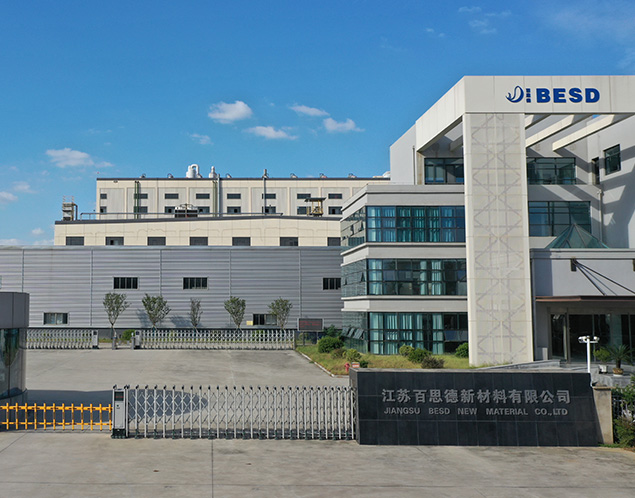
The morphology question and the sourcing question are more closely linked than they first appear. A resin wholesaler or trading intermediary can deliver a container of powder coating polyester, but they usually cannot explain why one batch flowed differently from the previous one, and they rarely hold the reaction records needed to investigate. A direct manufacturer with its own reactors, quality system and application laboratory can trace a variation back to a raw material lot, a reaction parameter or a milling setting.
For buyers comparing offers, four points are worth confirming in writing. First, whether the supplier owns the production facility or resells material, since this determines who is accountable for batch consistency. Second, whether customised grades and OEM or ODM development are available, because standard grades rarely fit a specific line perfectly. Third, what the annual production capacity is and how quickly an order can be delivered, since a large output capability protects a customer against supply interruption. Fourth, which certifications and patents the manufacturer holds, as these indicate the maturity of the quality management system.
Consistency across batches is where the amorphous nature of the resin helps. Because there is no crystalline fraction to vary, the properties of a well made polyester depend mainly on molecular weight distribution and acid value, both of which are tightly controlled in a modern plant. A producer operating automated production lines with in-process inspection can hold those parameters within narrow limits, which is what a coating formulator actually needs: a raw material that behaves the same way every time it is extruded.
Export experience also matters. Powder resins shipped across climate zones must survive temperature swings, and a manufacturer familiar with international logistics will advise on packaging, moisture barriers and container loading. Asking how goods are delivered and how quickly an enquiry receives a technical response are reasonable questions that separate an experienced exporter from an opportunistic one.
Quick Links to Our Product and Factory Resources
For readers who want to move from theory to a specific grade, the following pages cover the topics most often requested by coating formulators and purchasing teams.
The comparison between amorphous and semi-crystalline polymers is not a contest in which one side wins. It is a description of two different ways of packing polymer chains, and each one brings a specific set of advantages to a coating line. For powder coatings, the industry has already made its choice, and that choice is amorphous polyester, because flow, gloss and impact are the properties customers actually pay for. Semi-crystalline behaviour enters as a targeted adjustment, usually for storage stability or chemical resistance, and it is always paid for with a narrower process window.
The practical takeaway for a formulator or a purchasing manager is to keep the two questions separate. Ask first which curing chemistry suits the substrate, the service environment and the curing line. Then ask what the thermal data says about the resin that chemistry depends on. A supplier who can answer both with a differential scanning calorimetry curve, a melt viscosity figure and a batch specific certificate of analysis is a supplier worth keeping.


