


Content
- 1 What Color Compounding Actually Covers in Powder Coatings
- 2 The Four Decisions That Set the Ceiling on Colour Consistency
- 3 Where Colour Problems Actually Come From
- 4 Comparing Compounding Routes: Dry Blend, Bonding, Masterbatch and Melt Compounding
- 5 How Each Cure System Behaves Through the Colour Compounding Process
- 6 Substrate, Film Build and Application Effects on Final Colour
- 7 Five Ways to Buy Colour: Delivery Formats and What They Cost You
- 8 Specifying and Verifying Colour: Methods, Tolerances and Evidence
- 9 Troubleshooting Matrix for Common Colour Defects
- 10 Qualifying a Polyester Resin Manufacturer for Colour-Critical Work
- 11 Where to Go Next
A powder coating line in the Yangtze River Delta runs the same anthracite grey window profile five days a week. One Monday morning the extruder operator pulls a sample from the sixth tonne of a RAL 7016 order and the colour is visibly warmer than the panel approved three weeks earlier. The customer's incoming inspection measures a Delta E of 1.4 against the master standard, the tolerance is 0.8, and forty tonnes of production are now on hold while everybody argues about the pigment lot number.
The pigment lot is almost never the whole answer. In most cases the pigment was fine, the batch was fine, and the resin was fine in isolation. What moved was the relationship between them. Acid value drifted two units, extrusion screw speed was raised to hit a throughput target, the cooling belt ran faster because the ambient temperature climbed, and the cure oven lost four degrees on the top rail. None of those changes look like a colour decision. All of them are.
That is the practical core of color compounding. It is not colour matching, which is a one-off exercise in finding a formula that hits a target under laboratory conditions. Color compounding is the discipline of building a formula and a process window that reproduces that target across hundreds of tonnes, four seasons, several extruders and a dozen cure ovens, and then proving it with data that a customer's quality department will accept.
This article works from the top down. It starts with the decisions that set the ceiling on how consistent a colour can ever be, then moves through compounding routes, cure systems, substrate effects, delivery formats, measurement and supplier qualification. The examples are drawn from polyester resin chemistry, because that is where most of the leverage sits, but the logic applies whether you are compounding in-house, buying bonded powder, or contracting the whole job out.
If a colour drifts in production, look at the resin and the process window before you look at the pigment. The pigment sets the target; the resin and the process decide whether you can hold it.
What Color Compounding Actually Covers in Powder Coatings
Color compounding sits between pigment manufacturing and the coating line. It covers every step where pigment particles, resin, filler and additives are brought together and stabilised, and every process parameter that can move the final shade after that point. A useful way to think about it is as a chain with eight links, and the chain is only as strong as its weakest link.
- Pigment selection and grade choice, including whether the pigment is a genuine high-durability grade or a cheaper equivalent with the same Colour Index number.
- Pigment wetting and dispersion, which determines whether you are looking at separated primary particles or at agglomerates that will not break down later.
- Compounding route, meaning dry blending, bonding, masterbatch dosing or full melt compounding in the extruder.
- Dosing accuracy and feeding sequence, especially when pigment loading is below two percent and a scale error of a few grams becomes a visible shift.
- Extrusion energy, meaning screw configuration, temperature profile, torque and residence time distribution.
- Cooling, flaking and grinding, which influence particle size distribution and therefore transfer efficiency and film build.
- Application parameters, including gun voltage, powder feed rate, film thickness and substrate grounding.
- Cure profile, where the oven's real thermal history rather than its setpoint decides the final gloss, shade and mechanical performance.
The distinction between matching and compounding matters commercially. A formulator can match a colour in a 20 kilogram laboratory batch with a hand-weighed pigment addition and a carefully controlled oven. Reproducing that shade in a 500 kilogram production batch, on a different extruder, with a pigment that has been sitting in a humid warehouse, is a completely different problem. Companies that treat these as the same problem usually discover the difference during a customer audit.
There is also a terminology trap worth clearing up early. "Mixing" implies combining materials that keep their individual identities. "Compounding" implies changing the state of the system so that the pigment is wetted by the resin, the additive package is distributed at the molecular scale, and the resulting powder delivers the same optical result no matter which part of the batch you sample. A compound that looks homogeneous in a beaker can still be inhomogeneous at the ten-micrometre scale where light actually interacts with pigment particles.
Finally, color compounding has a duration dimension. A colour has to survive not just the day it is shipped but the ten or twenty years the coated part spends outdoors, in UV, in humidity cycling, in industrial atmospheres and in cleaning regimes. That is where the resin system starts to dominate the conversation, and it is where a low-cost pigment decision becomes an expensive warranty decision.
Color compounding is a chain of eight linked steps, and the cheapest way to lose a colour is to optimise one link while ignoring the seven around it.
The Four Decisions That Set the Ceiling on Colour Consistency
Before a single kilogram of powder is extruded, four decisions have already determined how consistent the colour can possibly become. They are not equally weighted, and they cannot all be compensated for later. Understanding the order of priority saves a great deal of rework.
1. Resin chemistry sets the ceiling
The polyester resin in a powder coating is not a neutral carrier for pigment. It determines the melt viscosity at extrusion temperature, the reactivity of the binder with the curing agent, the surface energy of the melt, and the chemical environment that the pigment particles experience. Two resins with the same nominal acid value can differ in molecular weight distribution enough to change how much shear energy a pigment agglomerate receives in the extruder. A resin with a broader molecular weight distribution will typically show a wider gloss and shade variation across the barrel temperature window.
Acid value and hydroxyl value tolerance bands are therefore colour parameters, not just reactivity parameters. A resin supplied at 32 to 36 mg KOH/g behaves very differently in a colour-critical application from one supplied at 33 to 35 mg KOH/g, even though both are nominally the same grade. Narrower bands cost more per kilogram and save far more than they cost once a colour-critical line stops chasing drift.
2. Pigment selection decides the durability curve
Two pigments with the same Colour Index designation can behave completely differently after one thousand hours of accelerated weathering. What separates them is crystal phase, particle size distribution, surface treatment and the level of impurity carried through the manufacturing route. A heat-stable grade and a non-heat-stable grade of the same chemistry can look identical in the powder and diverge sharply after the cure oven.
For outdoor applications, the pigment selection has to be made against the same weathering specification as the resin. It is technically possible to pair a premium weather-resistant polyester with an economy pigment and end up with chalking at three years. The resin will get the blame and the specification will get rewritten, but the pigment was the limiting factor all along.
3. The compounding route determines homogeneity
Dry blending in a high-speed mixer produces a powder that looks uniform and passes a visual check. It is not uniform at the scale that matters. Bonded powders, where the pigment is adhered to the base particle, and melt-compounded systems, where the pigment is wet out by the resin, deliver far better batch-to-batch consistency, especially at low pigment loadings and in metallic or special-effect finishes. The cost difference between routes is real, but so is the difference in rework rate.
4. The cure window decides the final shade
Every powder coating has a cure window bounded by undercure on one side and overbake on the other. Colour moves inside that window. Yellowness index climbs with thermal exposure, gloss falls, and the apparent shade shifts by a few tenths of a Delta E unit per ten degrees of overbake, depending on the system. In a mixed-product oven where large steel parts and small aluminium parts share a conveyor, the thermal history varies by far more than that.
Resin tolerance bands, pigment grade, compounding route and cure window must be specified together. Fix three of the four and the fourth will still move your Delta E.
Where Colour Problems Actually Come From
Before looking at the ranking itself, it helps to be clear about what is being ranked and why the ranking is not intuitive. Colour complaints rarely arrive with a diagnosis attached; they arrive as a rejected pallet, a photograph of a panel next to a master standard, and a request for a root cause within forty-eight hours. When a team investigates five or six such cases in a year, a pattern usually emerges that does not match the assumptions people bring to the investigation. Investigators tend to look first at the material that arrived most recently, which is usually the pigment batch, and last at the process that has quietly been running slightly differently for three months. The chart below reflects that gap: it ranks the origin of colour-related complaints by how often each source turns out to be the dominant cause once the investigation is finished, not by how often it is suspected at the start.
Where colour-related complaints originate (indicative share of dominant root causes)
The first thing the chart shows is that pigment wetting and dispersion accounts for roughly a quarter of dominant root causes, which is the single largest slice but nowhere near a majority. That matters because pigment is where most investigations begin. A team that suspects the pigment first will be right about one time in four and will spend three-quarters of its diagnostic effort in the wrong place.
The second observation is that extrusion and shear control, at twenty-two percent, sits almost level with pigment issues. This is a process variable that is usually treated as fixed once a formula is released, yet screw configuration, temperature profile, feed rate and torque all influence how much energy the pigment agglomerates actually receive. When a line increases throughput by speeding up the screw, the residence time distribution narrows and the specific energy input changes. The formula has not changed. The dispersion has.
Third, cure window mismatch accounts for eighteen percent. This is the category most often misattributed to the coating itself, because the symptom appears on the finished part and the finished part is where the coating is. Overbake raises yellowness index and drops gloss; undercure leaves the film softer and often slightly different in shade because the crosslink density alters the refractive behaviour of the surface. An oven survey with a data logger on a representative part, not a setpoint reading from the panel, resolves this category quickly and cheaply.
Fourth, resin batch variation at fourteen percent is lower than many formulators expect, and that is largely a consequence of modern resin manufacturing. A resin producer working with a narrow acid value and viscosity band removes most of the variation before it reaches the coating line. Where this category does appear, it is usually traceable to a supplier that is stretching a tolerance band to recover yield, or to a resin grade that was specified for mechanical performance and never validated for colour behaviour.
Fifth, substrate and pretreatment at eleven percent is systematically underestimated because it lives outside the coating department. Zinc-rich substrates, aluminium versus steel, phosphate coating weight, chromate-free conversion layers and even part temperature at the moment of powder application all shift the final appearance. Two parts with identical powder and identical oven profile can differ visibly if one was shot-blasted and the other chemically pretreated.
Sixth, storage and handling at nine percent is the smallest slice but the easiest to eliminate. Powder stored above thirty degrees Celsius for extended periods can undergo partial sintering, which changes the particle size distribution and therefore the charging behaviour and film build. Fluidised hoppers that are topped up rather than emptied, recycled overspray that is fed back without blending, and open containers in humid areas all contribute.
Read together, the chart says something specific about where to invest. Roughly forty-eight percent of colour problems originate in the compounding and extrusion stage, which means the highest-return investment is usually not a better pigment but tighter control of the compounding process and a supplier that holds its resin tolerances. Cure window and substrate issues account for another twenty-nine percent and are addressed by measurement rather than by purchasing. Only about one problem in four is genuinely a pigment problem, and even then the fix is often a grade change rather than a supplier change.
There is also a sequencing lesson. Because these categories interact, fixing the largest one first can mask the second. If dispersion is improved and the colour still drifts, the remaining variation is now cleanly attributable to the oven or the resin. Investigators who try to fix everything simultaneously lose the ability to attribute the improvement to anything.
A practical way to use this ranking is to build a simple checklist that forces the team through the categories in descending order of likelihood, with a defined measurement at each step. Sample the powder for pigment dispersion, log the extruder torque and temperature profile for the batch, run an oven survey on the actual parts, pull the resin certificate of analysis and compare acid value and viscosity to the previous three lots, verify pretreatment chemistry, and check powder storage temperature history. That sequence resolves the large majority of colour complaints without a single new pigment trial.
Only about one colour problem in four is genuinely caused by the pigment. Compounding and extrusion control together cause nearly half, so start your investigation there.
Comparing Compounding Routes: Dry Blend, Bonding, Masterbatch and Melt Compounding
The route you choose determines the homogeneity you can achieve, the cost you pay per kilogram, and the failure modes you will spend your time on. The table below compares the four routes that most powder coating operations actually use, with the practical consequences spelled out rather than the marketing descriptions.
| Route | How it works | Homogeneity achieved | Relative cost | Best suited to | Main risk |
|---|---|---|---|---|---|
| Dry blending | Pigment and other dry components are tumbled with base powder in a high-speed mixer; no thermal bonding step. | Low to moderate; separation can occur during transport and in the hopper. | Lowest | Short runs, interior decorative finishes, non-critical tolerance bands. | Segregation and dusting, leading to shade variation between the top and bottom of a hopper. |
| Bonding | Pigment is adhered to the base particle surface using controlled heating and mechanical agitation below the softening point. | Moderate to high; metallic and special effects benefit most. | Moderate | Metallic, pearlescent and effect finishes where dry blending fails. | Over-heating during bonding causes partial fusion and a coarse fraction that ruins transfer efficiency. |
| Masterbatch dosing | A highly loaded pigment masterbatch is produced separately and dosed into the base formulation at the extruder. | High, provided the masterbatch itself is consistent. | Moderate | Plants running many colours from a small number of base resins. | Dosing accuracy at low let-down ratios; a two percent scale error is a visible shade shift. |
| Full melt compounding | Pigment, resin, filler and additives are compounded together in the extruder and the colour is developed in the melt. | Highest; dispersion is controlled by specific energy input. | Highest | Outdoor, automotive, architectural and any colour-critical specification. | Requires disciplined process control; extrusion variation becomes the dominant colour variable. |
Two points are worth drawing out of the table. The first is that cost and homogeneity track together almost linearly, which means the decision is genuinely a specification decision rather than a purchasing decision. If the end use tolerates a wide Delta E, dry blending is rational and no one should apologise for it. If the end use is a twenty-year architectural warranty on a visible facade, dry blending is indefensible regardless of the price.
The second point is that the risk column changes character rather than disappearing as you move down the table. Dry blending fails through segregation, which is a physical separation problem. Melt compounding fails through process drift, which is a control problem. Process drift is easier to instrument and easier to correct, which is precisely why it is the preferred route for demanding work.
Choose the compounding route from the colour tolerance your customer will actually enforce, not from the price per kilogram your buyer will actually pay.
How Each Cure System Behaves Through the Colour Compounding Process
The binder system determines the melt rheology during extrusion and the thermal behaviour during cure, and both of those influence colour. Four systems cover the majority of the powder coating market, and each has a distinct colour personality that formulators learn to work with rather than against.
Hybrid epoxy-cured polyester systems
Hybrid systems pair a carboxyl-functional polyester with epoxy resin, usually in a fifty-fifty ratio, and are cured through the epoxy group. They offer excellent flow, good mechanical properties and low cure temperatures, which makes them the workhorse for interior applications such as office furniture, shelving and appliance internals. For colour work, their most useful property is low melt viscosity at extrusion temperature, which helps pigment wetting and allows a shorter extrusion cycle. Their limitation is UV resistance: the aromatic epoxy backbone yellows under sunlight and chalks relatively quickly.
In colour compounding terms, hybrid systems are forgiving. The broad cure window means the oven has less influence on final shade than in other systems, and the low viscosity supports good dispersion. The discipline required is on the pigment side: because hybrid coatings are usually interior, there is a temptation to specify economy pigments, and that decision is fine until someone moves the same part outdoors.
 Professional Polyester Resins For Hybrid Formulations ManufacturerUtility model patent certificateView Product →
Outdoor TGIC-cured systems
Triglycidyl isocyanurate cured polyesters dominate outdoor architectural and general industrial applications. The cured network is highly crosslinked and resists UV degradation well, which is why a well-formulated TGIC system can hold gloss and shade for years on a building facade. The trade-off is a higher cure temperature and a narrower window: typical schedules run around 200 degrees Celsius for ten to fifteen minutes, and pushing beyond that accelerates yellowing.
For colour compounding, TGIC systems demand respect for extrusion energy. The melt viscosity is higher, so the same screw configuration that disperses pigment well in a hybrid system may deliver incomplete wetting here. Raising the barrel temperature helps, but it also risks premature reaction if the residence time is long. The usual answer is a screw design with more distributive mixing elements and a shorter, cooler final zone, paired with a resin that has a tightly controlled acid value.
Professional Polyester Resins For TGIC Based Formulations ManufacturerUtility model patent certificateView Product →
Outdoor HAA-cured systems
Hydroxyalkylamide cured polyesters are the mainstream alternative to TGIC and are valued for their toxicological profile and for the film properties they deliver. They cure at similar temperatures to TGIC systems but the reaction evolves differently, releasing water as a by-product. That detail matters for colour: if the film is too thick or the heating rate too fast, volatiles can be trapped and produce pinholes or a slightly hazy surface that reads as a shade shift even when the pigment is unchanged.
HAA systems also tend to be somewhat more sensitive to overbake in the yellow direction. A cure oven that has been tuned for one system will not automatically suit another, and this is one of the most common sources of unexplained colour drift when a plant switches between HAA and TGIC grades on the same line.
Professional Polyester Resins For HAA Based Formulations ManufacturerUtility model patent certificateView Product →
Isocyanate and two-component systems
Isocyanate-cured and two-component TGIC polyesters occupy the high-performance end of the market, where flexibility, chemical resistance or very low cure temperatures are required. Their colour behaviour is generally excellent because the chemistry is clean, but they are less forgiving of moisture and of substrate contamination. A blocked isocyanate system that picks up moisture during powder storage will show both mechanical and optical problems, and the optical problem is often the first visible symptom.
Across all four systems, the practical rule is the same. Match the extrusion energy to the melt viscosity of the binder, match the cure schedule to the reaction kinetics of the curing agent, and keep the resin's acid value and viscosity band narrow enough that the melt rheology does not wander from lot to lot. Colour consistency is largely a rheology story told with optical vocabulary.
Every cure system has a different melt viscosity and a different cure window. Colour consistency depends on matching extrusion energy and oven profile to the specific binder, not on the pigment alone.
Substrate, Film Build and Application Effects on Final Colour
The same powder applied to two different parts in the same oven will not always produce the same colour. Substrate and application variables sit outside the compounding process, but they show up in the same complaint, so they belong in the same specification conversation. The two-column comparison below sets out how these variables behave differently in interior and exterior work.
| Interior applications | Exterior applications |
| Film thickness tolerance is usually the dominant variable. Thin films on sharp edges show as lighter, because the pigment-to-binder ratio at the surface differs and because light scattering changes with film build. | Weathering performance dominates. Film thickness below the specification accelerates chalking and gloss loss long before the bulk colour shifts visibly. |
| Substrate is commonly cold-rolled steel or galvanised steel with minimal pretreatment, so colour variation between parts is usually small. | Substrate may be aluminium, galvanised steel, or pretreated steel with a conversion coating. Aluminium parts heat faster and reach a higher peak metal temperature, which produces a visible shade difference against steel parts on the same conveyor. |
| Cure ovens run at moderate temperatures and the parts are often thermally light, so the risk of overbake is limited. | Components can be thick or thermally heavy, requiring longer dwell and higher peak temperatures. Overbake on the thinner sections of the same assembly is a common and easily missed cause of shade variation. |
| Powder recycling is common and overspray is fed back into the hopper. Without blending, this slowly shifts the effective pigment loading. | Recycling is often restricted for effect finishes, but where it is used the consequences are more serious because the colour standard is held for years, not months. |
| Gun settings and part grounding matter less because tolerance bands are typically wider. | Gun settings, part grounding and conveyor speed matter directly. Poor transfer efficiency at low film build produces a thinner, slightly lighter film that reads as a shade shift. |
The table makes one thing clear: interior colour control is mostly a compounding problem, while exterior colour control is a system problem that spans compounding, application and cure. That difference should be reflected in how the two situations are specified. An interior specification can reasonably focus on Delta E under a single set of application conditions. An exterior specification has to define the application conditions as well, or the tolerance will be unenforceable in practice.
A useful practical step for exterior work is to qualify colour on the parts that are hardest to coat, not on a flat test panel. Run the shade check on a section of the assembly with the highest thermal mass and on a section with the smallest, and compare both to the master standard. If both pass, the process is genuinely under control. If one passes and one fails, the powder is not the problem and changing it will not help.
Qualify exterior colour on the hardest-to-coat part in the assembly, not on a flat panel. If the worst part passes, the process is controlled.
Five Ways to Buy Colour: Delivery Formats and What They Cost You
Colour compounding does not have to happen inside your own plant. There are at least five commercial formats in common use, and each shifts a different part of the risk to a different party. Scroll across to compare them.
The choice between these formats is usually made on cost, but the more useful criterion is where the colour risk lives. If your application engineers understand extrusion and cure, in-house compounding gives you the shortest diagnostic loop when something drifts. If they do not, toll compounding or finished powder puts the diagnostic capability in the hands of people who compound every day.
There is a middle path that works well for many small and mid-sized coaters: buy resin to a tight specification, compound in-house for the volume colours, and buy finished powder or bonded effect powder for the long tail of low-volume and metallic shades. This keeps cost per kilogram low where volumes justify it and avoids the burden of managing thirty colours in-house.
Pick the delivery format based on where you want the colour risk to sit, not only on the price per kilogram. The cheapest format is only cheap if you can diagnose it yourself.
Specifying and Verifying Colour: Methods, Tolerances and Evidence
A colour specification that cannot be measured is not a specification. The practical task is to define the measurement conditions as precisely as the shade itself, because a Delta E value without a stated illuminant, observer, geometry and instrument is close to meaningless. The table below lists the tests that most reliably separate a genuinely consistent compound from one that merely looks consistent in the plant.
| Test | What it measures | Typical equipment | Why it matters commercially |
|---|---|---|---|
| Spectrophotometric Delta E | Colour difference from a master standard under defined illuminant and observer conditions. | Benchtop or portable spectrophotometer with a 45/0 or integrating sphere geometry. | This is the number written into the purchase contract. Without agreed conditions it becomes the number everyone argues about. |
| Gloss measurement at 60 degrees | Specular reflectance of the cured film. | Gloss meter. | A gloss shift of five units changes perceived colour without changing the measured hue, and customers notice it before instruments do. |
| Accelerated weathering | Gloss and colour retention after cycles of UV, condensation and temperature. | QUV or xenon arc chamber. | Separates a pigment that will survive a decade outdoors from one that will not, in a few weeks of testing. |
| Yellowness index after overbake | Thermal stability of the whole system at the upper end of the cure window. | Oven with logged profile plus spectrophotometer. | Predicts what happens to parts that run at the hot end of the oven, which is where most batch complaints originate. |
| Pigment dispersion microscopy | Size and population of undispersed pigment agglomerates in the extruded chip. | Optical microscope with transmitted light. | Directly diagnoses the largest single category of colour root causes before it reaches the customer. |
| Particle size distribution | Spread of the ground powder particle population. | Laser diffraction or sieve analysis. | Controls transfer efficiency and film build, both of which feed back into perceived colour. |
Tolerances deserve a separate comment because they are usually written before anyone has measured the process capability. A realistic approach is to run twenty consecutive production batches of the colour, measure Delta E against the master standard under the agreed conditions, and calculate the standard deviation. A tolerance of three standard deviations is achievable; a tolerance of one standard deviation is a wish. Writing a tolerance the process cannot hold guarantees a stream of rejected batches and a strained supplier relationship.
The instrument conditions matter as much as the tolerance. A colour that matches under D65 daylight may not match under the warm white illumination of a retail interior, because metamerism depends on the spectral power distribution of the light source and the spectral reflectance curves of the two samples. Where a customer will see the product under several light sources, specify the primary illuminant and a secondary check under a warm source, and accept that some residual difference under the secondary source is normal rather than a defect.
Finally, evidence discipline is what turns a specification into a working relationship. Keep the master standard under controlled conditions, record its measurement history, and re-certify it on a defined interval. A master standard that has faded on a windowsill invalidates every measurement made against it, and it is one of the quietest and most expensive failures in a colour department.
Set the Delta E tolerance from measured process capability across at least twenty batches, and protect the master standard as carefully as you protect the production line.
Troubleshooting Matrix for Common Colour Defects
When a defect appears, speed matters more than depth. The matrix below maps the four defects that account for most colour complaints onto their most probable causes, the first check that will confirm or eliminate each cause, and the corrective action that follows.
| Defect | Probable cause | First check | Corrective action |
|---|---|---|---|
| Shade drifts warmer over a production run | Progressive overbake as oven load builds, or increasing extruder torque as the die wears. | Data logger on a representative part through the oven; extruder torque trend over the run. | Re-balance oven loading and conveyor speed; schedule screw and die inspection at a defined interval. |
| Colour varies between the top and bottom of the hopper | Segregation in a dry-blended powder, or insufficient bonding of effect pigment. | Sample the top and bottom of a full hopper and compare Delta E. | Move to a bonded or melt-compounded route for that colour; eliminate long drop heights in the feed system. |
| Small dark specks or streaks in the film | Undispersed pigment agglomerates, or contamination carried over from a previous colour. | Microscopy on the extruded chip; cleaning record for the extruder and mill. | Increase specific energy input at extrusion, tighten the cleaning protocol, and run a purge compound between colours. |
| Colour correct but gloss noticeably lower | Under-cure, moisture in the powder, or a change in the matting additive distribution. | Solvent rub test, differential scanning calorimetry on the film, powder moisture content. | Correct the oven profile, control powder storage and hopper conditions, and verify additive dosing at the extruder. |
The matrix is deliberately ordered by how fast each check can be performed. The oven logger takes an hour, the hopper sampling takes ten minutes, the microscopy takes twenty minutes, and the solvent rub takes five. Running the five-minute checks first eliminates a surprising share of cases before anyone opens a certificate of analysis.
Run the cheapest diagnostic first. A solvent rub and a hopper sample eliminate a large share of colour complaints before any material testing begins.
Qualifying a Polyester Resin Manufacturer for Colour-Critical Work
Because the resin sets so much of the colour ceiling, the supplier qualification process deserves more attention than a certificate check. A resin manufacturer or supplier that can hold narrow acid value and viscosity bands, document them lot by lot, and support custom development is worth more to a colour-critical operation than one that competes purely on price per tonne.
The first question to ask is whether you are dealing with a direct manufacturer or a trading company, because the answer determines who actually controls the process when something drifts. A direct manufacturer can trace a batch back to its reactor charge, explain a viscosity excursion, and adjust the next lot. A trading company has to relay the question and wait, which adds days to every investigation and usually removes the possibility of a genuine custom formulation.
The second question concerns tolerance bands. Ask for the actual specification range on acid value, hydroxyl value, melt viscosity and colour of the resin itself, then ask how many lots in the last year fell outside the inner control limits. A supplier that holds a wide published band but runs to a narrow internal target is far more useful than one whose published band is the internal target.
The third question is about customisation. Colour-critical projects frequently need a resin tweaked for reactivity, flow or compatibility with a particular pigment system. A producer with an in-house development team can run that work; a distributor generally cannot. For projects involving a new pigment chemistry or an unusual cure schedule, this capability is often the deciding factor between a workable formula and a dead end.
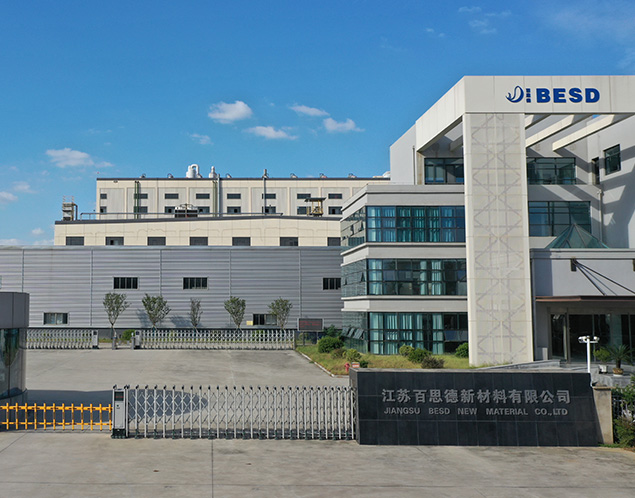
The fourth question is capacity and delivery reliability. Colour consistency collapses if a supplier runs out of a grade and a substitute is introduced mid-project, because the substitute will have a different melt rheology even if the certificate matches. A producer with substantial annual capacity, multiple production lines and a stocked finished goods warehouse can protect continuity in a way that a smaller operation cannot. For buyers assessing risk, this is often more important than a marginal price difference.
The fifth question is documentation. A supplier that can provide a certificate of analysis with each lot, that works within an ISO 9001 quality management system, and that can demonstrate environmental management under ISO 14001 is easier to audit and easier to defend to your own customers. Where an overseas customer requires supply chain transparency, these documents are the evidence.
Finally, ask about application support. A resin supplier that understands how its product behaves in hybrid, TGIC, HAA and isocyanate systems, and that can advise on extrusion energy and cure schedules, shortens the learning curve significantly. That kind of support is usually the difference between a formula that works on paper and one that holds its colour on a line running three shifts.
Qualify the resin supplier on internal control limits, customisation capability and capacity continuity, not on the published specification sheet alone.
Where to Go Next
Two pages on this site are particularly useful if you are working through a colour-critical project and want to see how the compounding and customisation side is handled in practice.
- ODM and OEM customisation capability, which explains how resin grades can be adjusted for a specific curing system, pigment package or application environment.
- Customised product enquiries, which sets out what information to prepare before approaching a resin producer so that the first technical exchange is productive rather than administrative.
Color compounding rewards a particular kind of patience. The pigment gets the attention because it is the visible ingredient, but the resin system, the extrusion energy and the cure window are what decide whether a shade can be repeated two hundred times without a complaint. Teams that instrument the process, keep the master standard under control, and define tolerances from measured capability spend less time firefighting and more time developing the next colour.
If you are selecting a polyester resin partner for colour-critical work, ask for the internal control limits rather than the published band, ask how many lots fell outside them last year, and ask who will answer the phone when a batch drifts at two in the morning. Those three answers will tell you more about your future colour consistency than any shade card.
Colour consistency is a process capability problem, not a pigment problem. Measure the capability, control the resin, and the pigment will do its job.


