


Content
- 1 How Thermoplastic Polymers Are Made: A Four-Stage Overview
- 2 Feedstock First: Turning Cracked Gas into Polymer-Grade Monomers
- 3 Polymerization: Matching the Chemistry to the Reactor
- 4 From Reactor to Pellet: Devolatilization, Additives, Filtration and Pelletizing
- 5 Processing Windows: Where the Pellet Becomes a Part
- 6 Thermoplastic versus Thermoset: One Word, Two Different Manufacturing Logics
- 7 Common Thermoplastic Families and What Their Route Implies for Buyers
- 8 Specifications That Reveal How Well a Polymer Was Made
- 9 Sourcing from a Manufacturer: What to Verify Before the First Order
- 10 What to Carry into Your Next Specification
Thermoplastic polymers are made in four linked stages: monomers are purified to polymer grade, polymerized in a reactor at controlled temperature and pressure, devolatilized and compounded into pellets, and finally melted again to be formed into a part. Catalyst choice, reactor configuration, additive package and pelletizing method are variations on that sequence, not alternatives to it.
The sequence matters because each stage fixes a property that no later step can recover. A reactor excursion that broadens the molecular weight distribution cannot be corrected in the extruder, and a wet pellet cannot be dried back into specification once hydrolysis has clipped the chains. Buyers who understand the order of operations can read a certificate of analysis as a description of the process that produced it, not just a list of numbers.
One clarification is worth stating early, because the two families share vocabulary and little else. Thermoplastics soften and flow on reheating because their chains are not covalently bonded to one another. Thermosetting materials, including the polyester resins used in powder coatings, are built as low-molecular-weight prepolymers and then crosslinked in place, which is why they cannot be remelted. Both routes start with monomers and reactors; they diverge at the point where the molecules are joined.
This article follows the thermoplastic route stage by stage, with the temperatures, purities and inspection values that appear on real purchase orders, and it flags where the thermosetting route departs from it.
A thermoplastic pellet is a process record in solid form: its molecular weight, purity and additive dispersion were all decided before the pelletizer, and the molder inherits every one of those decisions.
How Thermoplastic Polymers Are Made: A Four-Stage Overview
Almost every commercial thermoplastic is produced on a continuous train that runs from a purification column to a pelletizer. The plant is organised around four stages, and each stage has its own control variables, its own failure modes and its own set of numbers that end up on the specification sheet.
- Feedstock preparation and monomer purification. Cracked gases, refinery streams or bio-based intermediates are distilled, dried and inhibited until they meet a polymer-grade specification measured in parts per million.
- Polymerization. Monomers are reacted in a stirred autoclave, a loop reactor, a fluidized bed or a melt polycondensation train, with catalyst, temperature, pressure and chain-transfer agent setting the molecular weight and its distribution.
- Devolatilization and compounding. Residual monomer, solvent and water are stripped under vacuum, and antioxidants, process aids, fillers and colourants are dosed into the melt before filtration.
- Pelletizing, drying and packaging. The melt is cut into pellets under water or on a hot die face, classified, dried to a defined moisture level and packed in moisture-barrier bags or shipped in silos.
Nameplate capacities give a sense of the scale involved. World-scale polyolefin lines typically run at 200,000 to 500,000 tonnes per year, PET and polystyrene lines at 100,000 to 300,000 tonnes per year, and engineering resins such as polycarbonate or polyetheretherketone at far smaller tonnages. Monomer cost commonly represents 60 to 75 percent of the cash cost of a pellet, which explains why feedstock contracts, yield per tonne and energy recovery dominate the economics of the rest of the train.
| Stage | Typical equipment | Key control variable | Property locked in |
|---|---|---|---|
| Monomer purification | Distillation columns, molecular sieves, inhibitor dosing | Purity, water content, catalyst poisons | Reaction rate, colour, catalyst life |
| Polymerization | Autoclave, loop slurry, fluidized bed, polycondensation train | Temperature, pressure, catalyst, hydrogen or stoichiometry | Molecular weight, distribution, crystallinity |
| Devolatilization and compounding | Twin-screw extruder with vacuum vents, melt filter, loss-in-weight feeders | Vacuum level, residence time, additive dose | Volatiles and odour, gel count, colour, dispersion |
| Pelletizing and packaging | Underwater die-face cutter, crystallizer, classifier, metal detector | Cooling rate, pellet geometry, drying | Bulk density, fines content, moisture pickup, flowability |
Read the table from left to right and the logic of supplier qualification becomes obvious. A buyer who only tests incoming pellets is inspecting the end of a chain of decisions. A buyer who asks which reactor type produced the lot, and which control variable drifted in the previous campaign, is inspecting the decisions themselves.
Four stages, four chances to lose a specification: purity in the feed, control in the reactor, vacuum in the extruder and dryness in the bag.
Feedstock First: Turning Cracked Gas into Polymer-Grade Monomers
Most thermoplastic production begins in a steam cracker. Naphtha or ethane is heated to roughly 800 to 870 degrees Celsius with a steam-to-hydrocarbon ratio of 0.3 to 0.6 and a residence time of 0.1 to 0.5 seconds, which cracks the molecules into ethylene, propylene, butadiene and a range of aromatic streams. Everything downstream of the cracker exists to separate those components and polish them until they are fit for a catalyst that may tolerate only parts per billion of certain impurities.
Polymer-grade specifications are unforgiving by design. Ethylene is typically delivered at 99.9 percent minimum with water below 5 ppm, oxygen below 2 ppm, carbon monoxide below 0.2 ppm, acetylene below 5 ppm and total sulphur below 1 ppm. Propylene for coordination polymerization is usually 99.5 percent minimum with carbonyl sulphide and arsine controlled at the parts-per-billion level, because a Ziegler-Natta or metallocene catalyst will lose activity long before the operator notices a change in the reactor.
Other monomers carry their own handling rules. Styrene is shipped with 10 to 15 ppm of tert-butylcatechol to prevent spontaneous polymerization in storage, and the inhibitor has to be removed or overridden before the reactor. Methyl methacrylate carries a similar inhibitor and must be kept dry to avoid hydrolysis. Vinyl chloride is a gas at ambient conditions, handled under pressure, and the residual monomer in the finished polyvinyl chloride resin is controlled to below 1 mg/kg for food-contact grades. Monoethylene glycol for PET must meet ultraviolet transmittance limits and hold aldehydes below about 10 ppm, while purified terephthalic acid is specified on 4-carboxybenzaldehyde below roughly 25 ppm because that impurity terminates chain growth and depresses colour.
Polyamides illustrate how feedstock control becomes a product property. Caprolactam for PA6 is specified on purity, permanganate absorption number, volatile bases and water content, and a moisture shift of a few hundred ppm changes the hydrolysis equilibrium in the reactor, which shifts relative viscosity and can create gel particles. PA66 starts from nylon salt made by reacting adipic acid with hexamethylenediamine and adjusting the solution to a pH of about 7.6 to 8.0, because an unbalanced stoichiometry caps the achievable molecular weight permanently.
Recycled feedstocks add a further purification step rather than removing one. Pyrolysis oil from mixed plastic waste must be hydrotreated to strip oxygen, halogens and metals before it can enter a cracker. Mechanically recycled PET flake is usually upgraded by solid-state polycondensation to rebuild intrinsic viscosity, and chemically recycled PET is depolymerized to bis(2-hydroxyethyl) terephthalate or dimethyl terephthalate and then repolymerized. In every case the purification stage comes first, because a catalyst cannot distinguish between a virgin monomer and a contaminated one.
Polymer-grade means parts per million: the cheapest place to fix a quality problem is the distillation column, and the most expensive is the customer's moulding machine.
Polymerization: Matching the Chemistry to the Reactor
The reactor is where the molecule is written. Four polymerization families cover most of the commercial landscape, and each one constrains the equipment, the achievable molecular weight and the shape of the distribution curve.
Chain-growth polymerization by free radicals
Polystyrene, poly(methyl methacrylate), polyvinyl chloride and the styrenic part of ABS are made by free-radical addition. An initiator such as a peroxide or azobisisobutyronitrile decomposes thermally, adds to the first monomer unit and propagates until termination or chain transfer stops the sequence. Because termination is statistical, the molecular weight distribution is broad, and the operator controls it through initiator level, temperature and the concentration of a chain-transfer agent such as dodecyl mercaptan.
Reactor style follows the product. Polystyrene is often polymerized in bulk in a series of stirred tanks running from about 100 to 180 degrees Celsius, with devolatilization at the end. Suspension PVC is made in a water-jacketed autoclave at 50 to 60 degrees Celsius and 8 to 12 bar, with suspending agents controlling particle size and porosity, and conversion stopped at 80 to 85 percent before residual monomer is stripped. Emulsion polymerization produces the fine latex particles used for paste PVC and for the butadiene rubber phase of ABS.
Coordination polymerization
High-density polyethylene, linear low-density polyethylene and polypropylene are made with coordination catalysts, either Ziegler-Natta systems based on titanium tetrachloride supported on magnesium chloride with an aluminium alkyl cocatalyst, or single-site metallocenes that produce a narrower distribution and a more uniform comonomer placement. Hydrogen is dosed as a chain-transfer agent to trim molecular weight, and the comonomer, whether 1-butene, 1-hexene or 1-octene, sets the density and the short-chain branch distribution.
Three reactor configurations dominate. Gas-phase fluidized beds run at roughly 80 to 90 degrees Celsius and 20 to 30 bar with a recycled gas stream keeping the bed fluidized. Loop slurry reactors circulate isobutane or hexane at higher pressure and produce a narrow residence-time distribution. Solution processes operate at higher temperature and dissolve the polymer, which allows fast grade changes but demands a vigorous devolatilization step afterwards. The choice is visible in the pellet: gas-phase resins and solution resins of the same nominal melt flow index can behave differently in an extruder because their distribution breadth differs.
Step-growth condensation
PET, PA66 and polycarbonate are built by step-growth chemistry, where any two molecules can react and high molecular weight only arrives at high conversion. PET starts from purified terephthalic acid and monoethylene glycol in a molar ratio of roughly 1.15 to 1.2 to 1, is esterified at 240 to 260 degrees Celsius, then polycondensed at 275 to 290 degrees Celsius under a vacuum below about 1 mbar with an antimony or titanium catalyst. Water and glycol are removed continuously, because the equilibrium will not move otherwise.
Melt-phase PET typically leaves the reactor at an intrinsic viscosity of 0.60 to 0.65 dL/g. Bottle, film and technical yarn grades need 0.72 to 0.84 dL/g, which is reached in the solid state: amorphous pellets are crystallized at 150 to 170 degrees Celsius and then held at 200 to 230 degrees Celsius under nitrogen or vacuum for several hours. Solid-state polycondensation also strips acetaldehyde, which is why it is inseparable from food-contact PET production.
Ring-opening and ionic routes
Not every thermoplastic grows by addition or condensation. PA6 can be produced by hydrolytic ring-opening of caprolactam at 250 to 270 degrees Celsius, and thin-wall castings are made by anionic polymerization directly in the mould at temperatures below the melting point of the polymer. Polyoxymethylene is built from trioxane by cationic ring-opening, polylactide from lactide by ring-opening polymerization with a tin or zinc catalyst at 180 to 210 degrees Celsius, and styrene-butadiene-styrene block copolymers by sequential anionic polymerization that gives an extremely narrow distribution.
| Polymerization type | Typical polymers | Reactor configuration | Molecular weight control | What it locks into the pellet |
|---|---|---|---|---|
| Free-radical addition | LDPE, PS, PVC, PMMA, ABS | High-pressure autoclave, bulk stirred tanks, suspension or emulsion reactor | Initiator level, temperature, chain-transfer agent | Broad distribution, residual monomer, colour |
| Coordination addition | HDPE, LLDPE, PP | Gas-phase fluidized bed, loop slurry, solution | Hydrogen partial pressure, cocatalyst ratio, comonomer | Density, xylene solubles, stiffness and impact balance |
| Step-growth condensation | PET, PA66, PC | Melt polycondensation train followed by solid-state reactor | Vacuum, temperature, stoichiometry, solid-state time | Intrinsic viscosity, carboxyl end groups, colour |
| Ring-opening and ionic | PA6, POM, PLA, SBS | Autoclave, extruder-reactor, anionic cast | Catalyst and activator level, moisture, temperature | Conversion, residual monomer, block structure |
A practical consequence follows from this table. When a converter asks for a tighter melt flow index window, the supplier is being asked to narrow a distribution that the reactor chemistry sets. That is possible within limits, usually by tighter hydrogen control, longer devolatilization or blending, but it costs yield and it costs money.
The reactor decides the molecular weight distribution, and no downstream step can narrow it without paying for the loss.
From Reactor to Pellet: Devolatilization, Additives, Filtration and Pelletizing
Polymer leaving the reactor is rarely saleable. It carries unreacted monomer, solvent, oligomers and dissolved water, and it has no protection against the heat and ultraviolet light it will meet for the next twenty years. The compounding line fixes both problems in a single pass.
Devolatilization is usually performed in a twin-screw extruder with one or more vacuum vents, sometimes assisted by a stripping agent such as water, steam or nitrogen that increases the surface area available for diffusion. The target is product-specific: residual styrene in polystyrene for food contact is controlled to a few hundred ppm, residual vinyl chloride below 1 mg/kg, and residual caprolactam in PA6 for film grades to well under 1 percent. Volatiles that survive become odour, plate-out and mould deposit at the customer's plant.
Additives are dosed by loss-in-weight feeders at accuracies of a few tenths of a percent. A typical package contains a hindered phenolic antioxidant, a phosphite secondary antioxidant, an acid scavenger such as calcium stearate, and a slip or antiblock agent. Outdoor grades add a hindered amine light stabilizer; moulding grades add nucleating agents; filled grades take calcium carbonate, talc or glass fibre at 10 to 50 percent by weight, which changes the compounding line from a simple extruder into a wear-protected mixing machine.
Melt filtration is the quiet quality gate. Screen packs from 200 to 400 mesh remove gels, black specks and particles above roughly 20 to 40 micrometres before they can reach a film die or a bottle preform. The pressure differential across the screen changer is itself a quality signal: a rising differential on a stable product indicates increasing contamination in the feed or degradation in the extruder.
Pelletizing follows. Strand pelletizing draws the melt through a water bath at 60 to 80 degrees Celsius and cuts it into cylinders, a route that allows controlled cooling and therefore controlled crystallinity. Underwater die-face pelletizing cuts the melt as it exits the die, producing spherical pellets with a fast quench, which is the standard for PET because the amorphous skin prevents sticking in the dryer. Hot die-face cutting is used where the polymer is too viscous or too moisture-sensitive for a water bath. Pellet size usually falls between 2.5 and 4 millimetres, fines below 1 percent and dust are removed by classification, and metal detection is the last barrier before packing.
Drying and packaging close the loop. Polyamide and polycarbonate pellets must leave the plant below a defined moisture level, and packaging has to hold that level through months of storage and a sea freight leg. Twenty-five kilogramme bags with a polyethylene or aluminium liner, 1,000 to 1,250 kilogramme jumbo bags and bulk silo deliveries each have different moisture-pickup behaviour, and each one demands that the customer respect first-in, first-out rotation. Incoming inspection at this stage covers melt flow index, density, intrinsic viscosity, xylene solubles, ash, moisture by Karl Fischer titration, colour b* value, gel count, tensile and impact properties, and differential scanning calorimetry for melting point and crystallinity. Reputable plants run the same tests in process, and the traceability of a lot back to its reactor campaign is worth as much as the certificate itself; a plant with structured in-process inspection can usually produce that trail on request.
Devolatilization, filtration and drying are the three steps that separate a reactor product from a saleable pellet, and all three fail silently if the vacuum, the screen and the dryer are not monitored.
Processing Windows: Where the Pellet Becomes a Part
A pellet is a semi-finished good; the part only exists after the polymer has been melted, shaped and cooled again. Every thermoplastic therefore has a processing window, a band of melt temperatures in which viscosity is low enough to fill a mould and high enough to hold shape on ejection. Below that band the melt is too stiff, and screw torque, injection pressure and short shots become the limiting factors. Above it, the same chains that were built so carefully in the reactor begin to degrade through chain scission, yellowing, acetaldehyde or formaldehyde release and a permanent loss of impact strength. The window is a direct consequence of how the polymer was made, because molecular weight, comonomer content and additive package set both the viscosity curve and the thermal ceiling. The chart below compares the typical melt-processing ranges of nine common thermoplastics, and it is the clearest single picture of why grade selection and machine settings cannot be separated.
Typical melt-processing temperature windows for common thermoplastics (degrees Celsius)
PVC rigid
160 - 200
LDPE
160 - 220
PS
180 - 260
HDPE
180 - 260
PP
200 - 280
ABS
210 - 270
PET
260 - 300
PA66
270 - 310
PC
280 - 320
Horizontal bars show the working range; scale runs from 0 to 340 degrees Celsius.
The first thing the chart shows is that the working range is not centred on the polymer's melting point. PVC sits at the low end and also has the narrowest band, which reflects a polymer that is thermally unstable by nature and must be processed with stabilizers that were dosed during compounding. Its window is only about 40 degrees wide, and operators run it close to the lower edge deliberately, because the risk above 200 degrees is dehydrochlorination, not viscosity.
Polyolefins occupy the middle of the chart with comparatively generous bands. LDPE, HDPE and PP all tolerate 60 to 80 degrees of variation, which is one reason they dominate film, packaging and large moulded parts: the process has room to be industrial rather than surgical. The breadth comes from the saturation of the backbone and from the stabilizer package added in the extruder. It is not a licence to overheat, because a polypropylene run at 300 degrees will still lose molecular weight and emit odour, but it does mean that a converter can adjust temperature to fix a filling problem without destroying the material.
The right-hand side of the chart is where process engineering becomes critical. PET at 260 to 300 degrees sits only about 40 degrees above its melting point, and its window is narrowed further by hydrolysis: every kilogramme of PET carries a small amount of water, and above roughly 0.02 percent moisture the melt loses intrinsic viscosity faster than the extruder can push it out. That is why PET dryers run at 160 to 180 degrees for several hours and why the dew point of the drying air matters as much as the temperature.
PA66 is the most moisture-sensitive entry on the chart. Its processing range of 270 to 310 degrees is high enough to boil off surface water violently and to hydrolyse the chain ends, so drying to below 0.05 percent before moulding is a hard rule rather than a recommendation. Polycarbonate sits at the top of the range and pays for it with hydrolytic sensitivity and a tendency to yellow when residence time in the barrel is too long.
The chart also explains why the same polymer can be sold in several grades. A high-viscosity PC for extrusion and a low-viscosity PC for thin-wall moulding have the same chemistry but different molecular weights, so the low-viscosity grade can be run 10 to 20 degrees cooler. A supplier who quotes one processing range for a whole family is describing an average, not a grade.
There is a cost dimension too. Every 10 degrees of extra barrel temperature is energy, and it also shortens the life of the screw, the heater bands and the tool. Plants that run at the bottom of the window while still filling the mould reliably are usually the ones with the tightest moisture control and the best granulate consistency, because they can afford to run cooler.
Finally, the chart is a reminder that the pellet's history travels with it. A batch made with a broader molecular weight distribution from a gas-phase reactor will show a different viscosity response inside the same window than a solution-process batch of identical melt flow index. That is why converters who qualify a new supplier should run a temperature ladder on the first lot rather than trusting the datasheet, and why the resulting process window should be written into the internal specification alongside the incoming test values.
The processing window is set by the reactor and the dryer, not by the machine: narrow bands such as PVC and PET reward upstream control, while broad bands such as PP reward good stabilisation.
Thermoplastic versus Thermoset: One Word, Two Different Manufacturing Logics
The distinction between the two families is structural, not stylistic. Thermoplastic chains are linear or branched and held together by intermolecular forces that weaken predictably as temperature rises, so the material can be melted, shaped, cooled and melted again. Thermosetting systems are deliberately built short and then crosslinked in place, forming a covalent network that cannot flow, cannot be remelted and will only decompose if heated far enough.
Polyester exists on both sides of that line, which causes constant confusion in purchasing departments. Bottle-grade PET is a thermoplastic with a number-average molecular weight in the tens of thousands. The polyester resins used in powder coatings are oligomers with number-average molecular weights of roughly 2,000 to 6,000, glass transition temperatures of 50 to 65 degrees Celsius and acid values of 30 to 80 mg KOH/g. They are solid at room temperature, ground to 30 to 60 micrometres, applied by electrostatic spray and cured into a network at 160 to 200 degrees Celsius. After cure they behave like any other thermoset: solvent-resistant, hard and permanently infusible.
The curing chemistry defines the product family. Hybrid epoxy-cured polyester resins pair an acid-functional polyester with an epoxy resin, usually at ratios between 50:50 and 70:30, and cure at 140 to 180 degrees Celsius, which suits indoor applications where chemical resistance matters more than ultraviolet stability.
 Hybrid Epoxy-Cured Polyester Resins for Powder CoatingsFor indoor powder coatings where chemical resistance outweighs UV stability, these hybrid epoxy/polyester grades span 50:50 to 70:30 ratios.View Product →
Outdoor systems need a crosslinker that survives sunlight. Triglycidyl isocyanurate, known as TGIC, produces ester linkages with good weathering performance at cure schedules of 180 to 200 degrees Celsius, and two-component TGIC systems split the functionality across two resin components to tune flow and reactivity separately.
TGIC-Cured Polyester Resins for Outdoor Powder CoatingsOutdoor-grade TGIC systems with weathering performance and a broad grade range for high-gloss, building, and specialty powder coatings.View Product →
TGIC-free outdoor systems use hydroxyalkylamide, known as HAA, as the curing agent. The reaction releases water rather than a volatile organic compound, and the resulting coatings hold gloss and colour over long exterior exposure, which is why HAA chemistry dominates architectural aluminium in markets that restrict TGIC.
HAA-Cured Polyester Resins for TGIC-Free Outdoor CoatingsTGIC-free outdoor resins using β-hydroxyalkylamide for fast, lower-temperature cure and durable gloss and colour retention.View Product →
Isocyanate-cured polyester resins complete the set. Blocked isocyanates such as caprolactam-blocked isophorone diisocyanate unblock above about 160 degrees Celsius and react with hydroxyl groups, giving flexible, mechanically tough films for applications where a TGIC or HAA system would be too brittle.
| Aspect | Thermoplastic polyester such as PET | Thermosetting powder-coating polyester resin |
|---|---|---|
| Molecular structure | Linear chains, no covalent crosslinks between chains | Branched oligomer that forms a covalent network during cure |
| Typical molecular weight | Tens of thousands of grams per mole | Number-average around 2,000 to 6,000 grams per mole |
| Form supplied | Pellets or flake, dried before processing | Flake for grinding or finished powder of 30 to 60 micrometres |
| Film or part formation | Melt, shape, cool, demould | Spray, melt, flow, crosslink at 160 to 200 degrees Celsius |
| Behaviour on reheating | Softens and flows again | Does not flow; network degrades before it melts |
| Typical quality metrics | Intrinsic viscosity, moisture, acetaldehyde, colour | Acid value, glass transition, gel time, flow, reactivity |
The practical implication for buyers is that the questions are different. A thermoplastic buyer asks about molecular weight and moisture because those numbers predict processability. A thermoset powder buyer asks about acid value, glass transition and reactivity because those numbers predict cure behaviour, film appearance and storage stability. Treating the two as interchangeable in a request for quotation usually produces a technically valid but commercially useless answer.
Thermoplastics are melted, thermosets are cured: the same polyester name can describe a remeltable pellet or a permanently infusible coating, and the specification must say which.
Common Thermoplastic Families and What Their Route Implies for Buyers
The manufacturing route leaves fingerprints that a buyer can read directly from a datasheet. The table below summarises the main commercial families, the monomer each depends on, the polymerization route that dominates and the values that are worth testing on arrival.
| Thermoplastic | Main monomer or monomers | Dominant polymerization route | Typical melt range | What buyers check |
|---|---|---|---|---|
| HDPE and LLDPE | Ethylene with butene, hexene or octene comonomer | Coordination, gas phase or loop slurry | 180 to 260 degrees Celsius | Density, melt flow index, environmental stress crack resistance |
| PP | Propylene with ethylene comonomer | Coordination, gas phase or slurry | 200 to 280 degrees Celsius | Melt flow index, xylene solubles, impact strength |
| PVC | Vinyl chloride | Free-radical suspension or emulsion | 160 to 200 degrees Celsius | K-value, residual monomer, thermal stability time |
| PS | Styrene | Free-radical bulk | 180 to 260 degrees Celsius | Melt flow index, residual styrene, optical clarity |
| ABS | Styrene, acrylonitrile, butadiene | Emulsion or bulk polymerization | 210 to 270 degrees Celsius | Butadiene content, gloss, notched impact |
| PET | Terephthalic acid and monoethylene glycol | Melt condensation plus solid-state build | 260 to 300 degrees Celsius | Intrinsic viscosity, acetaldehyde, colour b*, moisture |
| PA6 | Caprolactam | Hydrolytic ring-opening | 240 to 280 degrees Celsius | Relative viscosity, extractables, moisture |
| PA66 | Adipic acid and hexamethylenediamine | Salt condensation | 270 to 310 degrees Celsius | Relative viscosity, moisture, yellowing index |
| PC | Bisphenol A with diphenyl carbonate or phosgene | Melt transesterification or interfacial | 280 to 320 degrees Celsius | Melt flow index, colour, hydrolytic stability |
| PMMA | Methyl methacrylate | Free-radical bulk | 200 to 250 degrees Celsius | Molecular weight, light transmission, haze |
| POM | Trioxane or formaldehyde | Cationic ring-opening | 190 to 230 degrees Celsius | Melt flow index, formaldehyde emission, thermal stability |
| PLA | Lactide from lactic acid | Ring-opening polymerization | 190 to 220 degrees Celsius | Molecular weight, D-isomer content, moisture |
Two rows deserve extra attention. Polyolefins dominate volume precisely because their routes are robust, gas-phase and slurry reactors tolerate grade changes quickly, and the resulting polymer needs little more than an antioxidant package to become a film or a crate. Engineering resins such as PC and POM sit at the other end: they are produced in smaller trains, they demand tighter drying, and their price reflects both the monomer cost and the number of purification steps behind it.
Bio-based and recycled entries are entering the same table rather than replacing it. PLA is polymerized from lactide in equipment that looks like a conventional condensation train, and recycled PET is repolymerized after depolymerization or upgraded in the solid state. Both routes obey the same rules about purity and moisture, which is why a converter's existing dryer settings usually survive the switch to a recycled grade, provided the intrinsic viscosity and acetaldehyde limits are met.
The family tells you where the risk sits: polyolefins fail on dispersion and gels, PET and polyamides fail on moisture, and polycarbonate fails on residence time.
Specifications That Reveal How Well a Polymer Was Made
Incoming test values are a proxy for the process. A melt flow index within a narrow band means the reactor temperature and the chain-transfer agent were held steady, and it also means the devolatilization step did not leave volatile residues that plasticise the melt. A moisture result below the limit means the dryer and the packaging did their jobs together, which is a harder achievement than either one alone.
Delivery form matters as much as grade, and the forms below are the ones a buyer is most likely to be offered.
Pellet, 2.5 to 4 mm
Standard for injection moulding and extrusion. Test melt flow index and fines content.
Flake or regrind
Common for PET and for reprocessed material. Check bulk density and intrinsic viscosity after drying.
Powder, 150 to 500 micrometres
Used in rotational moulding and in powder coating. Particle size distribution drives flow and coverage.
Glass-fibre compound
Pellets with 10 to 50 percent fibre. Verify fibre length retention and dispersion, not just loading.
Masterbatch
Colour or additive concentrate at 1 to 50 percent loading. Check carrier compatibility with the base resin.
Bulk silo delivery
Lowest packaging cost, highest moisture risk. Requires dedicated silos, dry air and first-in, first-out discipline.
|
What the certificate should state
|
What only a trial will reveal
|
Purchasing risk concentrates in the gap between those two columns. A supplier can meet every line of a certificate and still deliver a lot that gels in a thin film, because gel count depends on filtration and on the age of the screen pack rather than on the reactor. The practical answer is to write the trial result into the specification: name the filtration level, the maximum gel count and the acceptable cycle-time drift, then require a retained sample from every lot for twelve months.
Storage adds a second layer of risk that is often ignored. Polyamide pellets absorb moisture from humid air within days of opening a liner, and polycarbonate can hydrolyse during a long sea freight leg if the packaging is inadequate. Buyers who specify the packaging rather than accepting the default usually pay slightly more per tonne and considerably less per rejected batch.
Write the trial result into the purchase specification: a certificate proves the sample, a qualification proves the supply.
Sourcing from a Manufacturer: What to Verify Before the First Order
Whether the material is a thermoplastic pellet or a thermosetting polyester resin for powder coatings, the qualification questions overlap far more than the chemistry does. The first is identity: is the supplier a direct manufacturer or a trading company, and can they show the reactor, the compounding line and the packing station that will produce the lot. A trading company can be a perfectly good partner, but the answer changes who carries responsibility for a deviation and how quickly a corrective action can be implemented.
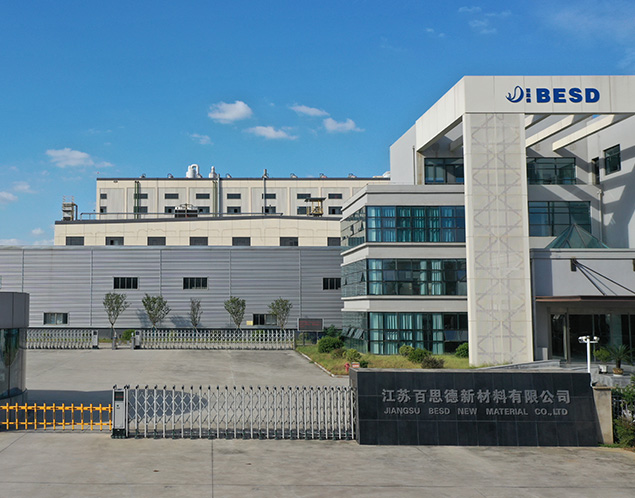
The second is capability expressed in numbers rather than adjectives. Annual capacity, the number of production lines, the size of the quality team and the laboratory equipment available all determine whether a supplier can hold a specification across thousands of tonnes. For reference, a polyester resin plant serving the powder coating industry might operate eight production lines with a capacity of 100,000 tonnes per year, hold ISO 9001 and ISO 14001 certification, and support both standard and ODM and OEM resin development for customers with application-specific requirements.
The third is consistency across the campaign. Ask how the supplier handles grade changes, whether a new lot is compared against a retained reference sample, and what triggers a customer notification. A supplier who can describe the trigger limits is usually a supplier who has thought about the customer's process.
The fourth is logistics. Delivery terms, packaging options, minimum order quantity, lead time for standard grades and lead time for custom development are all part of the technical answer, because a resin that arrives three weeks late is not a resin that meets the specification. Export experience matters here, particularly for moisture-sensitive polymers where the container route and the season affect the packaging decision.
The fifth is the paper trail. Certificates of analysis per lot, safety data sheets in the required language, test method references, and a documented complaints process are baseline expectations rather than differentiators. A supplier who cannot produce a retained sample from a lot shipped six months ago is telling you something about their quality system.
Qualify the process, not the sample: capacity, line count, traceability and notification triggers predict supply performance better than any single test report.
What to Carry into Your Next Specification
Thermoplastic polymers are made by a sequence that has barely changed in decades and is unlikely to change soon: purify the monomer, polymerize it under controlled conditions, strip the volatiles, compound the additives, filter the melt, cut and dry the pellet. What changes is the precision. Catalyst systems now control comonomer placement at the single-unit level, solid-state reactors deliver intrinsic viscosity windows that were impossible thirty years ago, and in-line spectroscopy is replacing grab sampling on new lines.
For a specifier, the useful takeaway is that every number on a datasheet corresponds to a decision made somewhere in that chain. Melt flow index is a reactor and chain-transfer decision. Moisture is a dryer and packaging decision. Gel count is a filtration decision. Colour is a feedstock purity and antioxidant decision. When a lot drifts, the drift can usually be traced to one of those decisions rather than to a mysterious change in the material.
The same discipline applies on the thermosetting side. A powder coating polyester resin is judged on acid value, glass transition, reactivity and flow, because those are the values that predict how it will behave in a curing oven at 180 to 200 degrees Celsius. Reading the two families through the same lens, the question is always the same: which step in the process produced this number, and how tightly is that step controlled.
Understand the four stages and every specification becomes traceable: the number on the certificate always has a machine, a temperature and a decision behind it.


