


Content
- 1 What Plastic Formulation Means in a Powder Coating System
- 2 Start With Polyester Resin Chemistry
- 3 Curing System Selection: Epoxy, TGIC, HAA and Isocyanate
- 4 Application Fit: Where the Formulation Has to Work
- 5 Where Formulation Effort Usually Goes
- 6 Processing Window and Quality Control
- 7 Procurement Checks for a Polyester Resin Supplier
A workable plastic formulation for a powder coating is usually decided before the first extrusion trial: the polyester resin, curing agent, filler package and additive set must already fit the substrate, cure schedule and outdoor exposure. In this article, plastic formulation refers to the resin-bound formulation used in thermoset powder coatings, not PVC compounding or commodity plastic pellet production. The practical conclusion is simple: start with the resin and curing system, then tune fillers, pigments and additives around that backbone. That order reduces trial cycles and makes supplier comparisons more meaningful.
For a formulator, the useful question is not “which resin is best?” but “which resin system gives the widest processing window for this application?” A resin that performs well in a thin decorative film may behave differently in a thick protective coating, a low-temperature cure line or a heavily filled system. The same logic applies to procurement: a polyester resin manufacturer, supplier or wholesaler should be assessed against the formulation route, not only against a price per kilogram.
Resin chemistry and cure chemistry set the formulation envelope; fillers, pigments and additives only refine performance inside that envelope.
What Plastic Formulation Means in a Powder Coating System
A thermoset powder coating is a dry plastic formulation in which the binder, curing agent, pigments, fillers and additives are selected to melt, flow, cure and adhere as one film. The polyester resin is the main binder component in many exterior-grade systems. Its acid value, glass transition temperature, melt viscosity and reactivity influence how the powder behaves during extrusion, grinding, spraying and curing. Those properties also affect the final film’s gloss, impact resistance, flexibility and weather durability.
Formulators rarely optimise one component in isolation. A high filler load can lower cost but may reduce flow and impact strength. A fast curing agent can raise line speed but may shorten the processing window. A matting additive can change surface appearance but may also alter cure response. The table below gives an indicative view of how the main parts of a powder-coating plastic formulation interact.
| Component | Primary function | Typical starting range | Common formulation risk |
|---|---|---|---|
| Polyester resin | Binder, film former and adhesion base | 40–70% | Wrong acid value or viscosity can narrow the cure window |
| Curing agent | Crosslinking and network formation | 3–10% | Over- or under-cure, yellowing, poor outdoor stability |
| Pigment and filler | Colour, opacity, cost control and mechanical support | 20–45% | High loading can reduce flow, gloss and impact resistance |
| Additives | Flow, degassing, matting, texture and stabilisation | 1–5% | Interactions can shift gloss, cure speed or surface quality |
This is why a formulation sheet alone is rarely enough for a technical review. The same resin grade can behave differently when the filler package, pigment type, extrusion temperature or film thickness changes. A supplier discussion should therefore include the intended substrate, pre-treatment, film thickness, cure schedule and performance standard. Without those inputs, “equivalent” resin grades may not be equivalent in practice.
Treat plastic formulation as a linked system: a change in resin, cure agent or filler load can move the whole processing and performance window.
Start With Polyester Resin Chemistry
Polyester resin selection is the first technical decision because it defines how the powder behaves before and after cure. For hybrid systems, the polyester is matched with an epoxy curing component to balance mechanical strength, chemical resistance and cost. For outdoor systems, HAA and TGIC routes are common, but they do not behave the same way. HAA systems are often chosen where low toxicity and exterior durability matter, while TGIC systems are used for demanding exterior performance and processing robustness. Isocyanate-cured systems belong to a different technical route and should be evaluated against the specific application.
Practical resin data to request includes acid value, hydroxyl value where relevant, glass transition temperature, melt viscosity, reactivity and recommended cure schedule. These values should be reviewed together with the intended filler load and film thickness. A resin with a high melt viscosity may help edge coverage or texture control in one system, but it can also reduce flow in a thin decorative film. A low-viscosity resin may improve levelling but increase the risk of sagging or poor edge coverage.
 Hybrid Epoxy-Cured Polyester Resins for Powder CoatingsReview grades by acid value, viscosity, Tg and cure schedule to match interior or dual-purpose powder coating requirements.View Product →
Hybrid epoxy-cured polyester resins are a useful reference point for interior or dual-purpose applications where mechanical strength and chemical resistance are central. They are not automatically interchangeable with outdoor HAA or TGIC systems. The formulator should confirm primer compatibility, cure schedule and any colour or gloss target before scaling a trial to production. This is also where a resin manufacturer with ODM/OEM experience can shorten development work by matching the resin platform to the application rather than forcing the application onto a standard grade.
Choose the polyester resin platform before fine-tuning fillers or additives; the resin sets the cure, flow and durability limits.
Curing System Selection: Epoxy, TGIC, HAA and Isocyanate
The curing route controls more than cure speed. It affects outdoor durability, film flexibility, chemical resistance, storage stability and the acceptable processing window. A formulator comparing quotations should therefore compare the full system, not only the polyester resin price. A lower-cost resin may require a higher additive load, a slower line speed or a narrower cure window, which can erase the apparent saving.
| Route | Typical match | Practical strength | Watch point |
|---|---|---|---|
| Hybrid epoxy | Interior and dual-purpose coatings | Mechanical strength, chemical resistance and cost balance | Outdoor durability is limited compared with exterior systems |
| TGIC | Outdoor architectural and industrial coatings | Robust exterior performance and processing latitude | Confirm regulatory and workplace requirements by market |
| HAA | Outdoor systems with low-toxicity preference | Exterior durability and a favourable toxicological profile | Cure response and yellowing risk need careful screening |
| Isocyanate | Specific industrial coating systems | Distinct property profile for targeted applications | Moisture sensitivity and handling controls require attention |
In practice, the curing agent should be selected with the resin, not after it. HAA systems can offer a strong exterior route, but the resin’s acid value and reactivity must match the HAA chemistry. TGIC systems can deliver robust exterior performance, yet the formulator still needs to check gloss retention, flexibility and overbake resistance. Hybrid systems can be very effective for interior applications, but they should not be positioned as direct replacements for exterior HAA or TGIC systems.
HAA-Cured Polyester Resins for Outdoor Powder CoatingsCompare reactivity, acid value and cure schedule across grades for lower-temperature outdoor HAA powder coating formulations.View Product →
For an outdoor HAA route, the formulation review should include cure schedule, film thickness, pigment choice and UV exposure target. For an outdoor TGIC route, the same discipline applies, with additional attention to mechanical flexibility and surface appearance after cure.
TGIC-Cured Polyester Resins for Outdoor Powder CoatingsReview grades by acid value, viscosity and cure schedule for hard, weather-resistant TGIC powder coating applications.View Product →
The best comparison method is a small design-of-experiment trial that changes resin grade and cure agent while holding the filler, pigment and application conditions constant. That approach shows whether a difference comes from the resin platform or from another part of the formulation. It also gives the purchasing team a defensible basis for comparing a manufacturer, supplier or wholesaler response.
Select the cure route and resin as one package; a curing agent that is cheap per kilogram can be expensive per cured square metre.
Application Fit: Where the Formulation Has to Work
Application conditions often decide which formulation compromises are acceptable. An automotive component may need impact resistance and appearance, while a garden fence may prioritise outdoor colour retention and cost control. Building materials often combine exterior exposure with different substrate profiles. Household appliances and office furniture usually place more emphasis on appearance, hardness and consistent gloss. Communication equipment and traffic facilities may require a different balance of durability, coverage and processing speed.
Automotive and transport
Impact, adhesion, appearance and cure consistency are usually more important than a single cost target.
Building and fence
Outdoor colour retention, chalk resistance and cost-effective film build drive the resin choice.
Appliance and furniture
Gloss control, hardness, surface smoothness and consistent colour are often the first quality checks.
Industrial equipment
Chemical resistance, coverage and line speed may outweigh ultra-high exterior gloss retention.
The same resin platform can be used across several application pages on a supplier site, but that does not mean one grade fits every use. A technical review should connect the application to a test plan: accelerated weathering, impact, bend, adhesion, salt spray, gloss and colour measurement. If the application is decorative, appearance tests may dominate. If it is protective, adhesion and corrosion tests should be prioritised. If it is both, the formulator needs a balanced test matrix rather than a single pass/fail result.
Match the formulation to the service environment first; appearance and cost targets should be optimised inside that performance boundary.
Where Formulation Effort Usually Goes
Most powder-coating formulation projects do not fail because one additive is missing; they fail because the project team spends too long on small additives before confirming the resin and cure system. In a typical review, resin chemistry receives the most attention because it controls flow, cure and durability. Curing chemistry comes next because it determines the reaction path and the safe processing window. Pigment and filler loading then affects cost, opacity and mechanical balance. Additives are important but usually refine a system that is already technically sound. Processing conditions tie all four areas together because extrusion, grinding and curing can reveal or hide formulation weaknesses.
Practical screening emphasis in powder-coating plastic formulation
The chart is not a specification and should not be read as a fixed ratio of effort. It is a reminder that formulation reviews should move from the backbone to the fine details. A team that starts with additives may produce a promising bench sample that fails when the resin batch changes or the line speed increases. A team that starts with resin and cure chemistry usually has a more stable base for later optimisation.
Resin chemistry deserves the first review because acid value, viscosity and reactivity are difficult to compensate for later. If the resin platform is wrong, additives can only mask the problem for a narrow set of conditions. Curing chemistry deserves the second review because it controls network formation and the safe operating window. A cure system that is too fast may force the line to run below its intended speed, while a system that is too slow may limit throughput or create handling issues.
Pigment and filler selection should follow the resin and cure decisions. Fillers can reduce cost and modify mechanical properties, but high loading may reduce flow, gloss and impact resistance. Pigments can affect cure response, opacity and weathering, so colour matching should be confirmed after the binder system is stable. Additives should be treated as tuning tools: flow agents, degassing agents, matting agents and stabilisers can solve specific defects, but they can also create new interactions.
Processing conditions connect the whole formulation. Extrusion temperature and residence time affect dispersion and pre-reaction. Grinding affects particle size and application behaviour. Curing time and temperature affect gloss, adhesion and mechanical performance. A formulation that looks good in a laboratory press may behave differently on a production line with different heat history. For that reason, scale-up trials should record extrusion conditions, particle size, film thickness and cure schedule together, not as separate notes.
The practical implication for buyers is that a supplier’s technical support should be judged by how it handles these linked variables. A resin manufacturer that can discuss cure windows, filler loading and application defects is more useful than one that only quotes a grade name. A supplier that asks for substrate, film thickness and cure schedule before recommending a resin is usually easier to work with. A wholesaler that cannot trace batch or resin platform information may add risk when formulation adjustments are needed.
Spend the first review on resin and cure chemistry, then use fillers, pigments and additives to refine a stable system.
Processing Window and Quality Control
A robust plastic formulation must survive normal production variation, not only the ideal laboratory condition. The processing window includes extrusion temperature, residence time, cooling, grinding, storage and curing. A formulation with a narrow window may pass one trial and fail the next batch if the resin reactivity, filler moisture or line temperature shifts. The formulator should therefore define acceptable ranges for gel time, flow, impact, adhesion and gloss before production starts.
Quality control should combine incoming resin checks with finished powder tests. Useful resin checks include acid value, viscosity, glass transition temperature and reactivity. Finished powder checks may include particle size distribution, bulk density, gel time, flow, cured film thickness, gloss, impact, bend and adhesion. For outdoor systems, accelerated weathering and colour retention tests are also relevant. The test plan should reflect the application rather than copying a generic list.
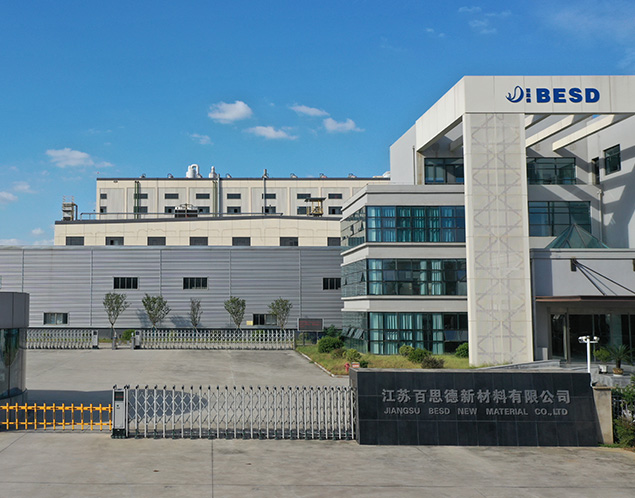
BESD’s manufacturing setup illustrates the kind of supplier capability that supports formulation work: a production base in Yangzhou Chemical Industrial Park, 8 energy-saving production lines, 2 automatic packaging machines and an annual polyester resin capacity of 100,000 tonnes. The company operates ISO 9001 and ISO 14001 systems and holds invention and utility model patents. For a technical buyer, those facts are useful only when they connect to batch consistency, traceability and responsive technical communication.
A formulation is production-ready only when its normal variation has been tested, not just its best-case laboratory result.
Procurement Checks for a Polyester Resin Supplier
When comparing a polyester resin manufacturer, supplier or wholesaler, separate commercial questions from technical evidence. A direct manufacturer should be able to explain its production route, quality system, capacity and customisation process. A trader may still be useful for small or mixed orders, but the buyer should know where the resin is made and who controls batch release. The table below offers a compact review structure.
|
Technical evidence
|
Commercial and delivery evidence
|
BESD’s public pages are useful for a first review: company background and manufacturing history and quality-control approach. These pages help a buyer check whether the supplier’s stated capability matches the formulation project. They do not replace a sample trial, but they make the first technical conversation more efficient.
For custom work, ask how the supplier handles ODM/OEM development, confidentiality, sample size and scale-up. For standard products, ask for batch consistency data and recommended storage conditions. For export orders, confirm packaging, documents and lead time early. A supplier that answers these questions clearly is easier to integrate into a formulation programme than one that only provides a catalogue grade name.
Buy resin on technical fit and batch consistency, not on a grade name alone; the cheapest quote may carry the highest trial cost.
A practical plastic formulation for powder coatings is built in sequence: define the service environment, choose the polyester resin platform, match the curing system, set the filler and pigment package, then tune additives and processing. This sequence keeps trials focused and makes supplier comparisons more honest. It also helps a formulator explain why two resins with similar data sheets can behave differently on the same line.
For B2B buyers, the strongest supplier is not always the one with the longest catalogue. It is the one that can connect resin chemistry to the application, provide consistent batches and respond to formulation questions with useful evidence. Whether the source is a manufacturer, supplier or wholesaler, the same rule applies: confirm the technical fit before scaling the order.
Build the formulation from resin and cure chemistry outward, then validate the whole system under production conditions.


